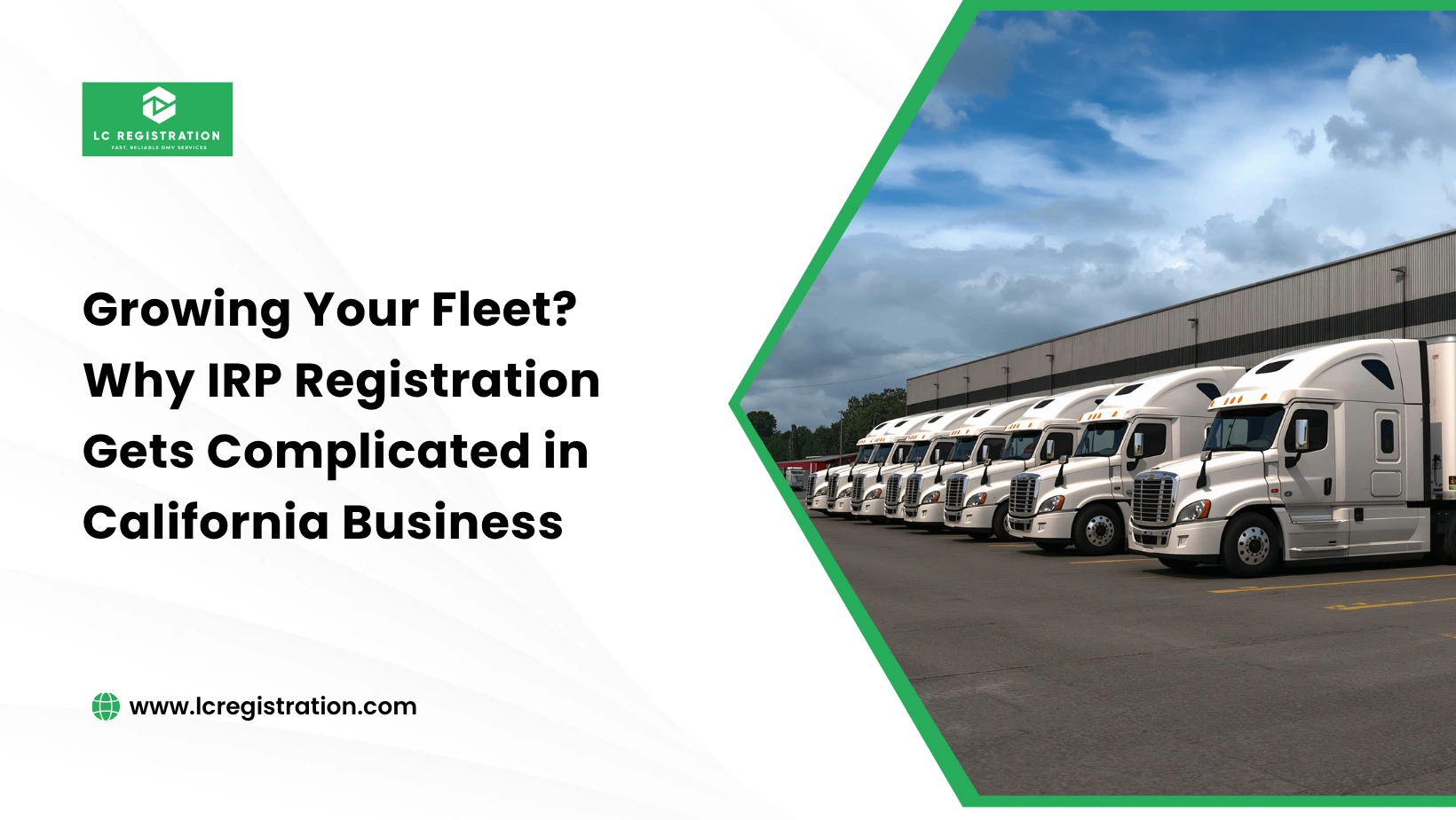
Fleet growth is a milestone for any transportation business. Adding trucks, expanding routes, and hiring more drivers usually signal higher revenue and broader market reach. But for transportation companies operating out of California, growth often brings an unexpected challenge: IRP registration gets complicated in California just when business momentum is strongest.
The International Registration Plan (IRP) is designed to simplify interstate travel by allowing commercial vehicles to legally operate across multiple jurisdictions with apportioned plates. However, as fleets grow, the process for IRP registration in California becomes increasingly complex. Operational demands rise, documentation multiplies, and even small errors can delay trucks from hitting the road.
Understanding where these complications arise is critical to maintaining compliance and keeping business operations moving smoothly.
What IRP Looks Like When You’re Small—and Why It Changes as You Grow
For small fleets, IRP registration can feel relatively manageable. With only one or two commercial vehicles operating across state lines, mileage tracking is simple, registration fees are predictable, and reporting requirements are easier to meet. The registration process may feel like a once-a-year task rather than an ongoing operational responsibility.
Growth changes everything. As a fleet expands into multiple states—or even Canadian provinces—the International Registration Plan IRP demands more detailed information. Each additional vehicle brings new vehicle details, such as the vehicle identification number, axle configuration, weight class, and safety standards compliance. California’s definition of commercial vehicle operations is strict, and the Department of Motor Vehicles (DMV) requires precise documentation before issuing IRP plates.
What used to be effective for a small operation no longer scales, especially when commercial vehicles travel under different conditions, weights, and jurisdictions.
Where Fleet Growth Creates Real IRP Operational Headaches
Vehicle Additions and Timing Conflicts
Growing fleets frequently add trucks mid-year. Each new commercial vehicle must meet IRP eligibility criteria before it can legally operate. Delays often occur when titles, business licenses, or required documentation are not ready at the time of application. Even one missing document can stall the entire IRP registration process, leaving heavy vehicles parked instead of generating revenue.
Mileage Tracking Across Multiple States
As vehicles travel across several jurisdictions, mileage covered must be accurately recorded and calculated based on miles traveled in participating states. More truck drivers and routes increase the risk of inaccurate records, missing fuel receipts, or incomplete operational records. IRP registration in California places significant emphasis on accurate records, especially during audits.
Weight, Axle, and Configuration Changes
Fleet growth often means heavier loads or vehicles with three or more axles. Registration fees depend on weight and configuration, and fees are calculated based on declared operating jurisdictions. Incorrectly calculating weights or mileage traveled can lead to legal complications and unexpected costs.
California Processing and Documentation Standards
Compared to other states, the California Department responsible for the fleet IRP registration service applies stricter review standards. The need for comprehensive registration, necessary documentation, and detailed information often leads to longer processing times, especially during peak renewal periods.
Common IRP Mistakes Growing Commercial Vehicle Operators Make
Many operators underestimate how quickly IRP requirements evolve during growth. One common mistake is treating IRP as separate registrations instead of a system connected to daily operations. Others assume the international fuel tax agreement (IFTA) and IRP function independently, when in reality, mileage and fuel records overlap heavily.
Relying on spreadsheets for too long, missing important deadlines, or misunderstanding the fee structure can create compliance gaps. Expanding interstate business without reviewing IRP compliance often results in avoidable delays, penalties, or roadside enforcement issues.
How IRP Complications Disrupt Day-to-Day Operations
IRP issues don’t just live in paperwork—they directly impact operations. Trucks may sit idle waiting for IRP plates, drivers may lose scheduled routes, and companies can miss contracts due to registration delays. When vehicles cannot legally operate across state lines, revenue opportunities disappear.
Operational teams often find themselves pulled into legal compliance tasks, shifting focus away from growth strategy. The pressure to avoid penalties while ensuring compliance adds stress to already stretched administrative resources.
Planning IRP Strategically as You Scale in California
As fleets grow, companies can no longer treat IRP registration as a periodic administrative task; they must integrate it into their broader operational strategy. Adding vehicles, expanding interstate travel, or operating across numerous jurisdictions requires planning to avoid registration delays and compliance gaps.
Successful fleet operators align truck purchases with IRP registration timelines, ensure all required documents are prepared in advance, and implement systems for accurately tracking mileage traveled across participating states. This includes maintaining detailed operational records, fuel bills, and reporting data that meet both IRP and International Fuel Tax Agreement requirements.
In California, where documentation standards and review processes are more rigorous, many growing fleets choose to work with a DMV-authorized fleet IRP registration service partner. Having experienced support helps ensure IRP requirements are met, fees are correctly calculated, and application forms are submitted accurately—allowing vehicles to operate smoothly without disrupting business operations during periods of growth.
Conclusion
The growth of the fleet should be propelling the business forward and not causing operational choke points. Knowing the reasons why IRP registration in California becomes complicated helps transportation companies predict hurdles, stay compliant, and keep their operations moving without unnecessary delays as they grow. And working with a trusted DMV partner can make a meaningful difference. LC Registration provides comprehensive support by managing the full IRP registration process, coordinating directly with the California DMV, and ensuring all necessary documentation, mileage reporting, and fee calculations are completed correctly and on time.
FAQs
Why is vehicle registration so expensive in California?
California vehicle registration costs more because the state calculates fees based on vehicle value and weight. Emissions programs and highway funding add to the cost. Besides this, commercial trucks operating across state lines must also meet strict state and federal regulations.
How long can you go without paying your registration in California?
California allows a short grace period after expiration, but driving with expired registration can result in penalties, citations, and vehicle impoundment. Fees increase the longer registration remains unpaid.
How much are apportioned plates are in California?
Apportioned/IRP plate costs in California vary widely. Fees depend on vehicle weight, number of jurisdictions traveled, mileage traveled in participating states, and IRP requirements. There is no flat fee—costs are calculated based on usage.
What is the new registration law in California?
Recent California registration updates focus on stricter compliance, accurate mileage reporting, emissions standards, and enforcement. Commercial vehicles must meet updated documentation, reporting requirements, and deadlines to legally operate and avoid penalties.