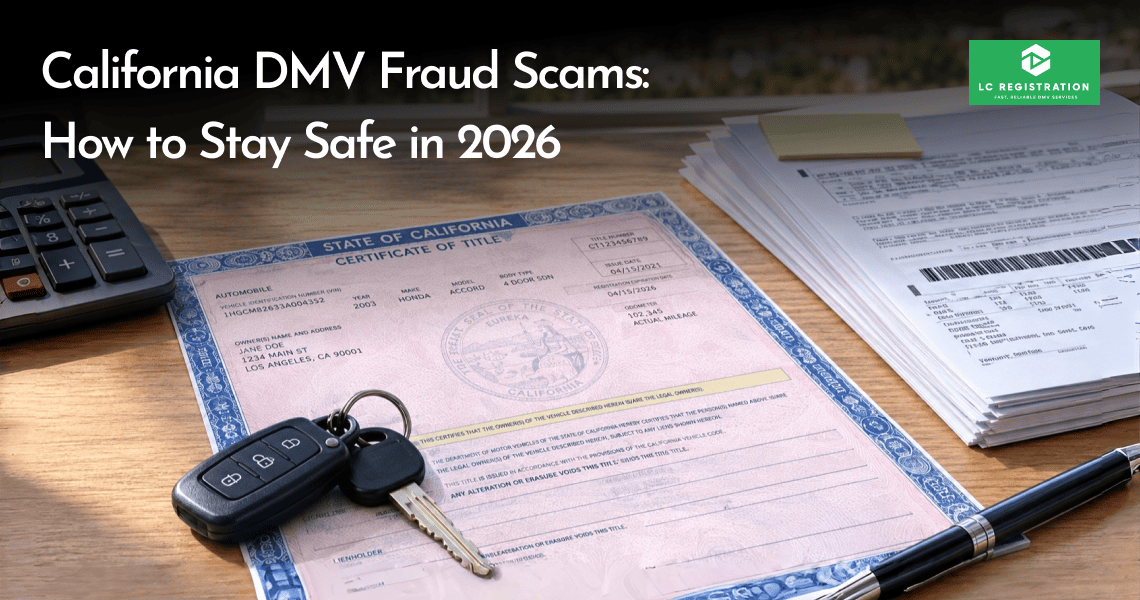
Navigating vehicle registration and DMV services in California has always required patience, but lately, drivers are facing a much more deceptive challenge than long wait times: increasingly sophisticated fraud schemes.
As digital transactions become standard, bad actors are leveraging advanced smishing tactics, AI-generated clone websites, and fraudulent vehicle title schemes to target California vehicle owners. At LC Registration, our mission goes beyond helping you process tags, titles, and transfers quickly, we are dedicated to keeping your personal data, identity, and hard-earned money safe.
Here is an authoritative breakdown of the most prevalent California DMV fraud scams, how to spot them before it’s too late, and the precise steps to protect your vehicle and identity.
Smishing & Text Message Fraud: The Unpaid Toll & Ticket Trap
The most widespread fraud scheme targeting California drivers relies on “smishing” (SMS phishing), fake text messages designed to induce immediate panic.
How the Scam Works
You receive a text message claiming to be from the “California DMV,” “FasTrak,” or “CA Toll Services.” The message typically reads:
“FINAL NOTICE: You have an unpaid toll/traffic violation fine of $5.45. Failure to pay within 24 hours will result in a $50 late fee, suspension of your driver’s license, or immediate vehicle registration hold. Click here to resolve: ca-dmv-payment-portal.com”
When you click the link, you are directed to a look-alike portal that mimics official state branding. The site prompts you to enter your driver’s license number, Social Security number, home address, and credit card details. Once submitted, scammers steal both your funds and personally identifiable information (PII).
Red Flags to Watch For
- Unsolicited Payment Requests via Text: Official agencies like the California DMV never send unsolicited text messages demanding immediate payment or threatening license suspension via a text link.
- Non-Government URLs: Official California DMV web addresses always end in .gov (e.g., dmv.ca.gov). Scammers use domain tricks such as .com, .org, -ca.gov-portal.net, or shorteners.
- Urgent & Threatening Tone: Demands for instant payment under threat of immediate legal consequences are classic psychological manipulation tactics.
Fake DMV Web Portals & Search Engine "Sponsorship" Scams
Searching for “renew California registration online” or “CA DMV title transfer” on major search engines can inadvertently direct you into a trap if you aren’t paying close attention to search results.
How the Scam Works
Fraudulent third-party operations pay for sponsored ad spots at the top of search engine results pages. These ads feature domain names that sound legitimate, such as california-dmv-renewals-online.org or cadmv-express-tags.com.
When clicked, these sites ask for your vehicle registration details and credit card information. They charge exorbitant “processing fees” (often $50 to $150 above state fees) without submitting your renewal to the state. In the worst cases, they harvest your financial credentials and process no transaction at all, leaving your registration expired and legally delinquent.
Feature | Fake / Scam Site | Official / Licensed Partner |
Domain Ending | .com, .net, .org | .gov or verified DMV partner site |
Payment Methods Accepted | Zelle, Venmo, Wire, Crypto | Credit / Debit / ACH |
Processing Transparency | Hidden “service fees” added at checkout | Clear, itemized state fees |
Unsolicited SMS Links | Frequently sends text links | Never demands SMS payments |
Title Washing & Salvage Vehicle Fraud
While online phishing targets your identity, vehicle title fraud targets your financial security directly through private-party vehicle purchases.
How the Scam Works
Title washing is the illegal practice of altering a vehicle’s title history to remove negative designations, such as Salvage, Junk, Flood Damage, or Odometer Rollback, before selling the vehicle to an unsuspecting buyer.
Scammers buy severely damaged or totaled cars cheaply, perform cosmetic repairs, and transfer the vehicle through states with different title-branding thresholds or forge physical ownership documents. By the time the vehicle is listed on peer-to-peer marketplaces in California, it carries what looks like a “clean” title.
The Hidden Risks
- Structural & Electrical Dangers: Flood-damaged vehicles often suffer from corroded wiring and failing airbag deployers, creating severe safety risks.
- Insurance Denial: If an insurance provider discovers a washed title after an accident, they may deny coverage entirely.
- Unregisterable Vehicles: The California DMV may flag the discrepancy during title transfer, rendering the vehicle untagged and illegal to drive. Always check national vehicle databases like NMVTIS before completing a private vehicle transaction.
Fake Third-Party Service Providers
California law allows legitimate private companies to process vehicle registrations and titles as authorized partners. However, unauthorized bad actors exploit this business model by setting up fake registration services.
How the Scam Works
These unaccredited outfits advertise ultra-low processing fees or promise to “bypass” California emissions (smog check) requirements, clear back-due penalties, or issue titles for vehicles without proper ownership documentation.
Once you pay them and hand over your original pink slip or personal details:
- They disappear with your payment and original ownership documents.
- They issue forged registration cards or counterfeit license plate stickers.
- You remain fully liable for unpaid state fees, penalties, and traffic citations.
Essential Checklist: How to Protect Yourself from CA DMV Fraud
Protecting your vehicle records and financial identity requires continuous verification. Incorporate these habits whenever managing your vehicle documentation:
Action Steps if You’ve Been Targeted
- Report Smishing Attempts: Forward fraudulent text messages to 7726 (SPAM) and file a report with the Federal Trade Commission.
- Contact Your Financial Institution: If you submitted payment details on a suspicious portal, immediately freeze or cancel the compromised cards.
- Notify State Investigations: Report vehicle title fraud, odometer tampering, or counterfeit registration stickers directly through the official CA.gov Fraud Reporting Portal.
- Place a Fraud Alert: If you shared sensitive information (such as your SSN or Driver’s License Number), place a fraud alert on your credit profile with Equifax, Experian, and TransUnion.
Secure, Hassle-Free Vehicle Processing with LC Registration
Avoiding DMV fraud doesn’t mean you have to endure long lines or confusing government portals on your own.
At LC Registration, we offer a secure, stress-free alternative for California vehicle owners. As a trusted, fully compliant partner, we protect your sensitive data while handling your California Title Transfers, Registration Renewals, out-of-state transfers, and replacement tags efficiently.
- Guaranteed Security: Direct, encrypted processing ensures your personal information remains safe.
- Transparent Pricing: No surprise charges or hidden “convenience” markup.
- Expert Verification: We review every document and title history to ensure your transaction complies fully with California law.
Don’t gamble with suspicious text links or unverified online forms. Explore LC Registration’s Online Tag & Title Portal today to process your California vehicle registration safely, quickly, and with total peace of mind.
Frequently Asked Questions (FAQs)
Does the California DMV ever text you about unpaid tolls or fees?
No. The California DMV does not send text messages requesting immediate payment or threatening driver’s license suspension. Any text message demanding payment via a link is a scam.
How can I verify if a California registration website is official?
Check the URL in your browser’s address bar. Official California government portals always end in .gov (such as dmv.ca.gov). Private services should explicitly list their California DMV Business Partner license number.
How do I check if a used car's title has been washed before buying?
Immediately freeze any credit or debit cards you entered on the fake site, report the incident at ReportFraud.ftc.gov, and monitor your credit report for unauthorized activity.
What should I do if I already clicked a scam DMV text link?
Immediately freeze any credit or debit cards you entered on the fake site, report the incident at ReportFraud.ftc.gov, and monitor your credit report for unauthorized activity.
Can I legally renew my California registration through a private company?
Yes. California permits licensed registration service providers to process tag renewals, title transfers, and out-of-state transfers. Make sure you use verified providers like LC Registration’s Vehicle Services to ensure your transaction is handled securely.