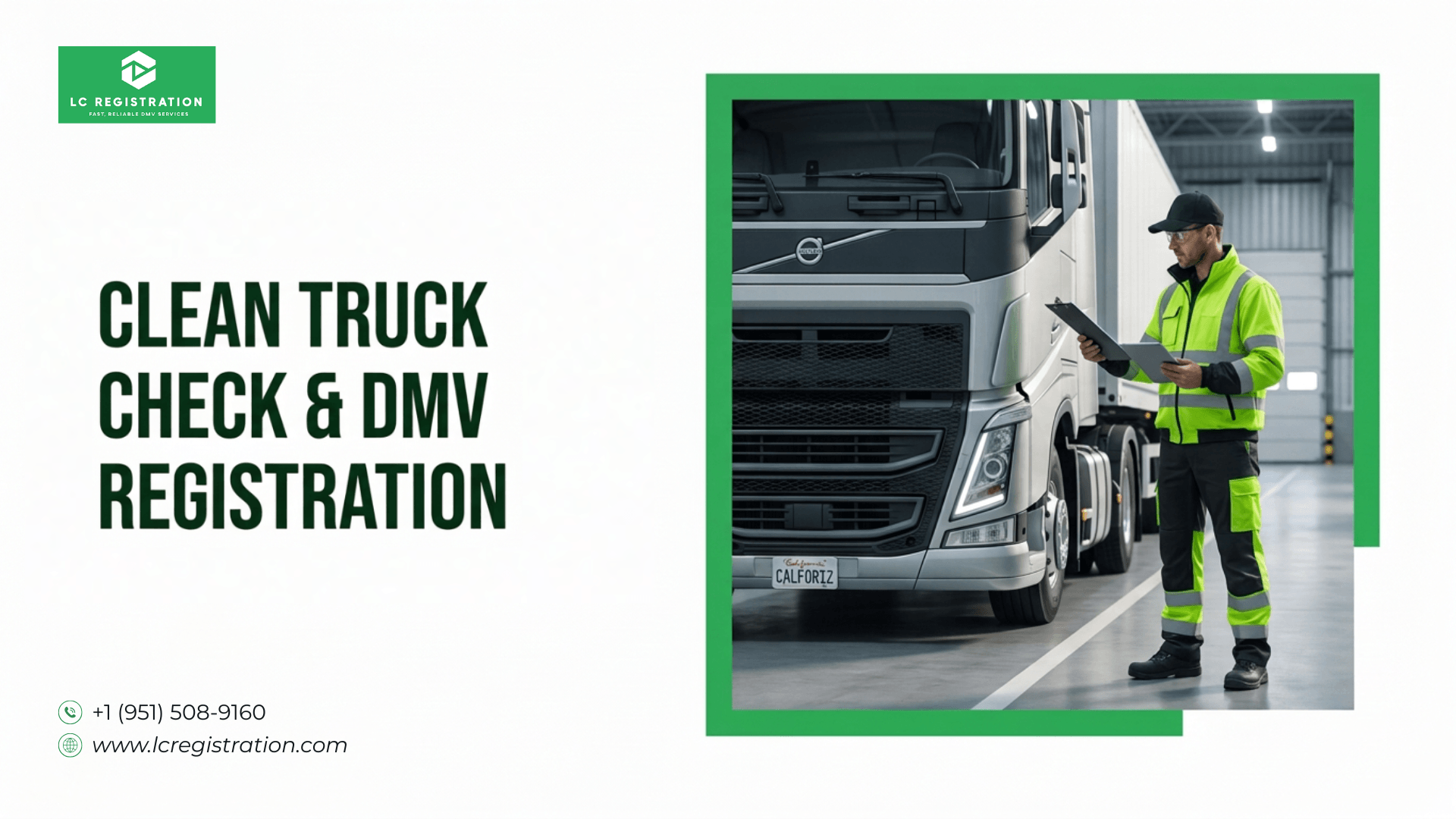
If you run trucks in California, you’ve probably heard that the state backed off its emissions rules. That’s half true, and the half that isn’t true is the half that stops your registration from going through.
California did abandon its zero-emission fleet mandates. But two separate regulations, Clean Truck Check and the Truck and Bus Regulation, remain fully in force, and both are wired directly into the DMV. Fail either one and your renewal doesn’t process. Not late, not penalised. Blocked.
Here’s exactly where things stand in 2026.
What actually got rolled back
Advanced Clean Fleets (ACF) is effectively dead. CARB withdrew its EPA waiver request on January 13, 2025, and later agreed in a legal settlement not to enforce the High-Priority Fleet and Drayage Fleet requirements, and to begin formally repealing them. State and local government fleet requirements are the exception and continue.
Advanced Clean Trucks (ACT) the manufacturer sales mandate, lost its waiver when Congress passed Congressional Review Act resolutions in May 2025.
So if you were bracing for a forced transition to electric trucks, that pressure is off for now.
What did not change: the emissions rules tied to your DMV record. Those were never waiver-dependent, and they’re the ones that touch your registration.
Clean Truck Check: the rule most likely to block your renewal
Clean Truck Check applies to nearly all diesel and alternative-fuel vehicles with a gross vehicle weight rating over 14,000 lbs operating in California, in-state and out-of-state, private and commercial, right down to single-vehicle fleets.
Three things have to be true for every covered vehicle:
Reported in CTC-VIS: CARB’s Clean Truck Check Vehicle Inspection System, with owner and vehicle details.
Annual compliance fee paid: per vehicle. The fee is adjusted yearly; check the current amount in your CTC-VIS account before you budget for it.
Passing emissions test submitted: by a CARB-credentialed tester, on schedule.
The 2026 testing schedule catches people out
Vehicle type | Testing frequency in 2026 |
Most heavy-duty commercial vehicles | Twice per year (semi-annual) |
Agricultural vehicles and California-registered motorhomes | Once per year |
OBD-equipped vehicles from Oct 1, 2027 | Four times per year |
Semi-annual is the default now, and it trips up operators who still think of emissions testing as an annual chore. Your deadline is set by your DMV registration expiration date if the vehicle is California-registered, or by the last digit of the VIN if it isn’t.
One useful piece of flexibility: a passing test can be submitted up to 90 days before your deadline. Use that window. It’s there so you have time to fix a fault and retest without missing the date.
How the SB 210 registration hold works
This is where fleets lose days they can’t afford.
When a vehicle misses its Clean Truck Check requirements, CARB places an SB 210 hold at the DMV. That hold blocks most transactions on the vehicle, not just renewal.
Clearing it isn’t instant, and the sequence matters:
- Meet all outstanding requirements in CTC-VIS, fee paid and passing test submitted.
- Payment processing is its own delay. Card payments can take 1–2 business days to clear in CTC-VIS; eCheck payments can take up to 7.
- Once compliance registers, the hold lifts 1–3 business days later.
- The DMV will not automatically mail your tags. You have to go back and complete the transaction yourself, in person at a field office, through the DMV Virtual Office, or by calling the Field Office Support Unit.
Add it up and a missed deadline can easily cost you a week and a half of truck downtime. That’s the real cost, not the fee.
You don’t need to show CARB paperwork to the DMV. The systems talk to each other. If you’re already sitting in a hold, our guide on how Clean Truck Check non-compliance blocks DMV registration walks through clearing it.
The Truck and Bus Regulation: an older rule with sharper teeth
Separate rule, separate problem. Since January 1, 2023, diesel vehicles with a GVWR over 14,000 lbs operating in California must have a 2010 or newer engine and emissions system.
Under SB 1, the DMV is required to verify compliance before registering a heavy-duty vehicle. Non-compliant vehicles are denied registration outright, this isn’t a hold you clear with a fee, it’s a hard no.
Two things worth knowing:
Reporting errors cause unnecessary denials.
The regulation governs engine model year, but the DMV screens on vehicle model year, assuming the engine is a year older. If you have a 2010 chassis with a same-year or newer engine, report it in CARB’s Excluded Diesel Vehicle Reporting (EDVR) system well before your registration is due, or you’ll be denied on a technicality.
The 90-day TOP is not a reprieve.
If your vehicle isn’t compliant, you may be able to pay your registration fee and receive a 90-day Temporary Operating Permit, starting the day your registration expires. You can drive, but the vehicle is still non-compliant and can still be cited. CARB treats the TOP as your final chance to comply, not an extension.
The remaining exemptions are narrow: the Low-Use Exemption (under 1,000 miles per year in California, with annual odometer reporting in TRUCRS) and the NOx Exempt Area Flexibility Option. Everything else has expired.
What this means for how you manage registration
Emissions compliance is no longer a side task that sits with your maintenance shop. It sits on your registration calendar, because it now determines whether the registration happens at all.
The fleets that handle this well do three things: they run CTC-VIS as a tracked system with one accountable owner, they test early inside the 90-day window rather than at the deadline, and they align emissions deadlines with registration dates so nothing gets checked twice or missed entirely.
That last piece is where structure helps. Our fleet vehicle registration services consolidate renewals so you’re tracking one schedule instead of twenty, and qualifying fleets can go further with Permanent Fleet Registration, which removes annual renewals altogether. If you’re weighing that up, our comparison of fleet vs. individual vehicle registration covers which structure suits which size of operation.
And emissions isn’t the only thing that can freeze a renewal. Trucks at 55,000 lbs or more need a stamped Schedule 1 from Form 2290, and multi-state operations need current IRP registration.
The same 10-day rule under Vehicle Code §4159 applies to every vehicle in your company’s name.
The failure modes are just different for a business: renewal notices routed to a yard you closed, a registered agent address that isn’t a real place of business, and no single person responsible for the update after an office move. Read our guide on how to change your vehicle registration address in California for the process.
Frequently Asked Questions
Does Clean Truck Check apply to out-of-state trucks?
Yes. Any covered vehicle operating in California is subject to it, regardless of where it’s registered. Out-of-state vehicles use the last digit of the VIN to set their deadline.
How often do I need emissions testing in 2026?
Twice a year for most heavy-duty commercial vehicles. Agricultural vehicles and California-registered motorhomes test annually.
How long does it take to clear a CARB registration hold?
Allow 1–3 business days after compliance is met, plus payment processing time, which can run to 7 business days for eCheck. Then you still have to complete the DMV transaction yourself.
What is REG 4008 and when do I need it?
It’s the Declaration of Gross Vehicle Weight, required for vehicles with an unladen weight of 6,001 lbs or more. It sets the declared weight your fees are calculated from.
Is Advanced Clean Fleets still in effect?
Not for private fleets. CARB withdrew its waiver request in January 2025 and agreed to repeal the High-Priority Fleet and Drayage requirements. Government fleet requirements continue.
Can I register a pre-2010 diesel truck in California?
Generally no, unless it qualifies for the Low-Use Exemption or the NOx Exempt Area Flexibility Option. Non-compliant vehicles are denied registration under SB 1.