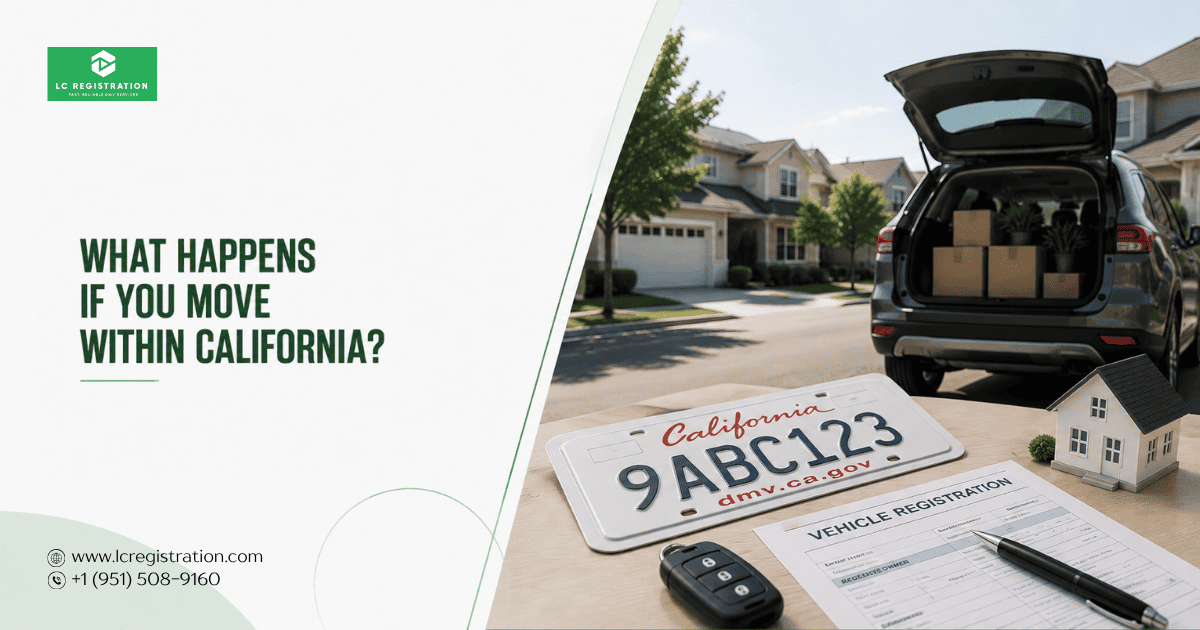
You have 10 days from the day you move to change the address on your vehicle registration. It’s free, and most people can do it online in about five minutes.
That part is simple. What catches California drivers out is everything that follows. Your renewal notice goes to the address the DMV has on file. Your smog obligation is tied to your ZIP code. Your renewal bill depends on which county you live in. Move across town and none of that changes. Move across a county line, or sometimes just to a different ZIP inside the same county, and it can.
Here’s what actually happens when you move within California, and what you need to handle in those 10 days.
How long do you have to change your vehicle registration address in California?
Ten days. Vehicle Code §4159 requires registered owners to notify the DMV within 10 days of a change of residence or mailing address.
Your driver’s licence has its own 10-day deadline under Vehicle Code §14600. These are two separate records and two separate obligations. Updating one does not update the other.
If your vehicle is financed, the lienholder is also required to notify the DMV of any address change of their own under VC §§4159, 4160, and 9865. That’s their responsibility, not yours, but it’s worth knowing if your paperwork ever goes missing.
How to change your registration address
There are three ways to do it:
Method | Best for | Timeline | Cost |
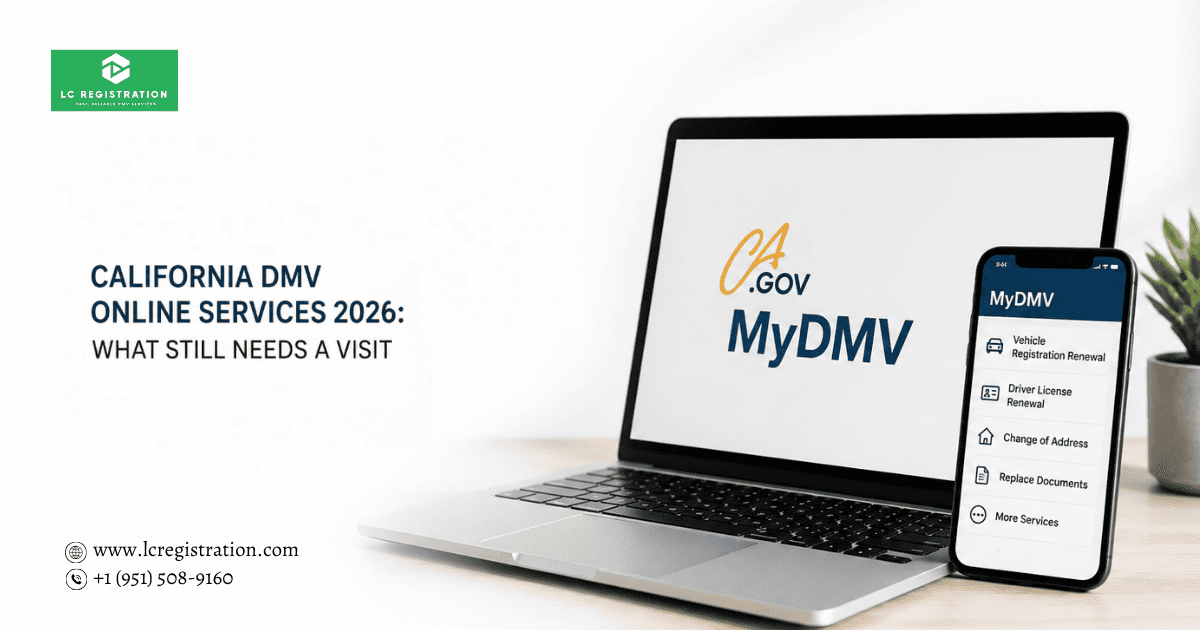
MyDMV online | Anyone with a current California DL/ID, an SSN, and a U.S. address | About 3 days to process | Free |
DMV 14 form by mail | No CA DL/ID, no SSN, or an APO/FPO or non-U.S. address | Allow up to 10 days | Free |
In person or licensed registration service | Multiple vehicles, or a renewal due at the same time | Same day | DMV free; service fee applies |
In the MyDMV Change of Address flow you can update your licence and your registration in the same session. Select both. That’s the single easiest way to avoid leaving one record pointing at your old house.
One detail almost nobody knows: the DMV does not mail you a new registration card after an address change. Per the DMV’s own Vehicle Industry Registration Procedures Manual, you’re expected to line through the old address on your existing registration card, print or type the new one, and initial the change. Do that as soon as your update is submitted, and keep the card in the vehicle.
Does changing your driver's licence address update your vehicle registration?
No. This is the most common mistake on this topic.
The DMV keeps your licence and your vehicle records separately and does not sync addresses between them. Plenty of drivers update their licence, assume they’re done, and then miss a renewal notice a year later. Change both.
What doesn't change when you move within California
Moving inside the state is a paperwork update, not a re-registration. You keep:
- The same licence plates. No new plates, no plate transfer.
- The same title. No re-titling and no California title transfer needed.
- The same registration card, corrected by hand as described above.
There’s no VIN verification and no fee. That’s different from bringing a vehicle in from another state, which requires a full out-of-state vehicle registration — if that’s your situation instead, read our guide on registering your vehicle in California as a new resident.
What can change: your smog requirements
California’s Smog Check Program is run by the Bureau of Automotive Repair, and it splits the state into three areas: Enhanced, Basic, and Change of Ownership. Enhanced and Basic areas require a smog inspection every two years at renewal. Change of Ownership areas only require one when the vehicle is sold.
Here’s the part that matters when you move: the program is applied by ZIP code, not by county. Six counties are split internally, with some ZIP codes requiring biennial testing and others not:
- El Dorado
- Placer
- Riverside
- San Bernardino
- San Diego
- Sonoma
Two of those are right here in the Inland Empire. A vehicle registered in an Ontario ZIP sits in the biennial testing area. The same vehicle registered at an address in parts of the San Bernardino mountains or the eastern desert may only need a smog check at change of ownership.
Don’t assume either way. Run your new ZIP through the BAR’s Smog Check Area Lookup before your next renewal comes due.
What can change: your registration fees
California registration is not one flat number. On top of the statewide fees, counties and special districts add their own charges, air quality management fees, Service Authority for Freeway Emergencies (SAFE) fees, abandoned vehicle abatement, and local transportation assessments.
There is no statewide default for these. They’re set locally under Vehicle Code §§9250.2, 9250.7, and 9250.10–9250.17, which means two identical cars at two California addresses can have different renewal totals.
If you’ve moved to a new county, run your plate through the DMV’s renewal fee calculator before you budget for it. Your next bill may not match your last one.
What happens if you don't update your address in time
The consequences don’t arrive as a fine for the late address change. They arrive later, and they cost more.
Registration renewal notices are generated more than 60 days before your expiration date and mailed to the address on file. If that’s your old address, you don’t get it. And the DMV does not offer a grace period on renewal fees, penalties start accruing the day after your registration expires, whether or not a notice ever reached you.
From there it compounds: expired tags are a traffic-stop and towing risk, and unpaid renewals can lead to a suspension that requires a full registration reinstatement to clear.
Not receiving the notice is not a defence. If your sticker hasn’t shown up, here’s what to do if you didn’t receive your DMV registration sticker.
Your 10-day moving checklist
- Vehicle registration address — for every vehicle in your name
- Driver’s licence or ID address
- Auto insurance — your garaging address affects both your premium and your coverage
- Lienholder or leasing company
- USPS mail forwarding
- Toll transponder account (FasTrak)
How LC Registration can help
Most single-vehicle address changes you can handle yourself online in a few minutes, and you should.
Where it’s worth calling us is when there’s more going on, several vehicles to update, a vehicle registration renewal falling due mid-move, a missed notice, or a suspension to clear. We’re a licensed and bonded California DMV partner in Ontario, and we handle the filing so you don’t lose a morning to it.
We also speak English, Spanish, Punjabi, and Hindi, so you can explain your situation in whichever language you’re most comfortable with.
Moving within California is one of the few DMV tasks that’s genuinely quick, as long as you don’t skip it. Give it 10 minutes inside your 10-day window, check your new ZIP code against the smog map, and you won’t hear about it again until your next renewal.
If your registration is already overdue, or you’re moving several vehicles at once, contact LC Registration and we’ll take it from here.
Frequently Asked Questions
Do I need new licence plates if I move within California?
No. Your plates, title, and plate number all stay the same. Only the address on your record changes.
Is there a fee to change your vehicle registration address?
No. The update is free whether you do it online, by mail, or at a DMV office.
Can I change my registration address without a California driver's licence?
Yes, but not online, the MyDMV system requires a current California DL or ID. File a DMV 14 (Notice of Change of Address) by mail or in person instead.
How long does the DMV take to process a change of address?
Online updates usually process in about three days. Allow up to 10 days overall, and check your status in MyDMV.
Do I have to update the address for each vehicle I own?
Yes. Every vehicle registered in your name needs the update.
What if I'm moving out of California?
You still have to notify the DMV within 10 days. When your California renewal notice arrives, write the date the vehicle left the state and the name of the state where it’s now registered on the back of the stub, and mail it back so your record is closed out properly.