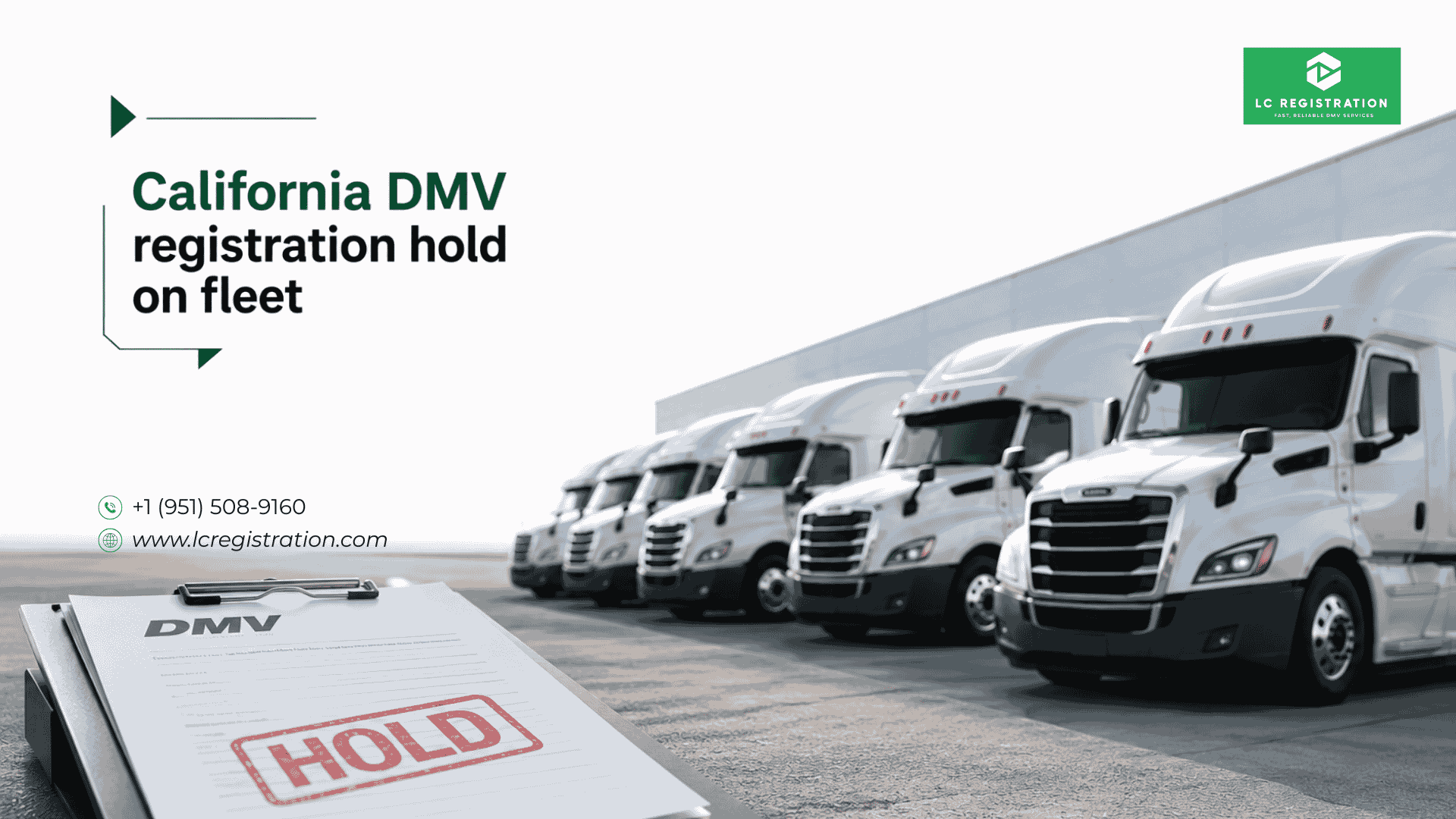
If your fleet vehicle gets a DMV registration hold, it’s essentially frozen. You can’t renew it, transfer it, or legally put it back on the road until the hold is cleared. For an individual driver, that’s an inconvenience. For a fleet operator, it can mean lost revenue, missed deliveries, and real legal exposure, especially if drivers are still operating vehicles they shouldn’t be.
The problem is that most fleet managers don’t find out about a hold until they’re already in trouble. By then, fees have piled up, deadlines have passed, and getting back into compliance takes weeks rather than days. This guide breaks down the causes of California DMV registration holds, what’s at stake if you ignore them, and how to resolve them before they become a much bigger problem.
What Triggers a Registration Hold on Fleet Vehicles
Not all registration holds are the same. California places holds on vehicles for several reasons, and knowing which one you’re dealing with is the first step toward fixing it.
Unpaid Registration Fees or Late Renewal
This is the most straightforward trigger. Miss your renewal deadline, and the penalties start piling on fast. California’s late fees start at 10% of your renewal fee if you’re 1-10 days late, and they keep climbing, all the way up to 160% if you’re more than two years overdue. Once you cross the six-month mark, the DMV can place a full registration hold, blocking any renewal until all amounts owed are paid.
SB 210 / Clean Truck Check Non-Compliance
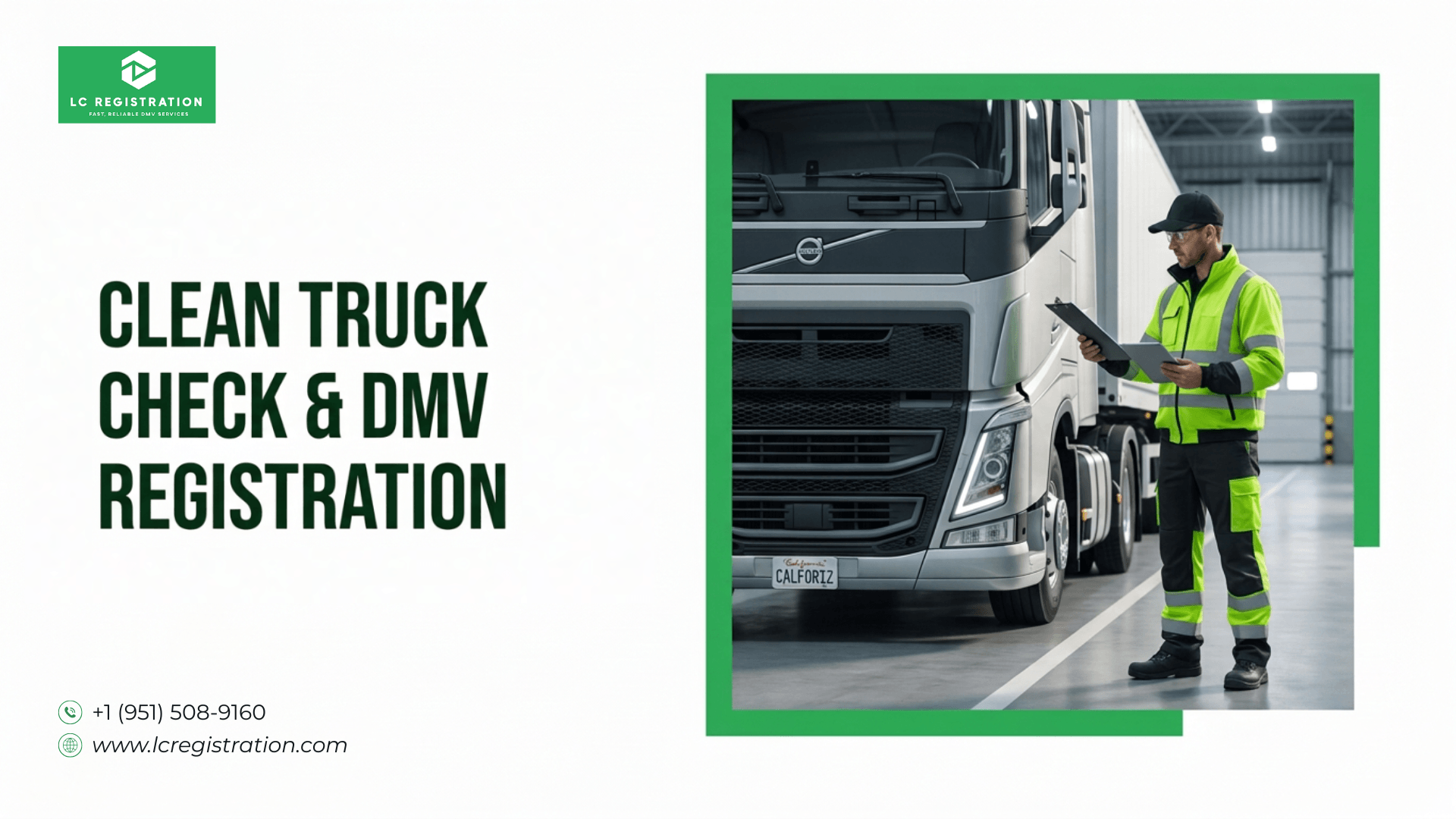
This is the biggest one-hit commercial fleet right now. California’s Clean Truck Check program (Senate Bill 210) is currently the most active source of DMV registration holds for commercial fleets in California, and many operators are still getting caught off guard.
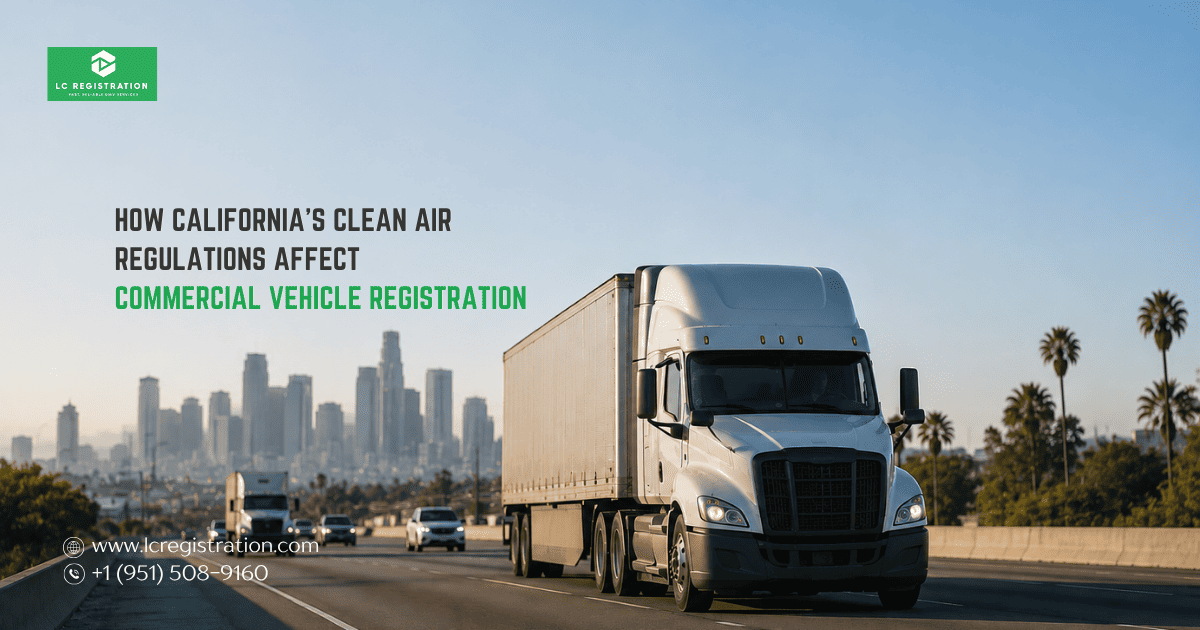
It applies to nearly all diesel and alternative-fuel heavy-duty vehicles over 14,000 lbs GVWR operating on California roads, including out-of-state vehicles. If your trucks drive California routes, they’re subject to these rules regardless of where they’re plated.
If your truck hasn’t been registered in the Clean Truck Check Vehicle Inspection System (CTC-VIS), hasn’t paid its annual compliance fee, or hasn’t passed its emissions test, a hold goes on, no warning, no grace period.
Unpaid Tolls
Agencies like the Transportation Corridor Agencies (TCA) have a direct agreement with the California DMV to place registration holds on vehicles with unpaid toll violations. That means skipping a toll booth, even once, can eventually show up as a block on your vehicle’s registration. For fleets running multiple trucks through toll roads daily, this adds up quickly.
Court-Issued Holds
If a driver receives a citation and fails to appear in court or doesn’t resolve the ticket, the court can notify the DMV to place a hold on the vehicle’s registration. These can be some of the slowest holds to clear because they require action on the court side before the DMV will budge.
Emissions Test Failure or Non-Submission
Since October 2024, emissions compliance testing is no longer just a formality. All compliance deadlines on or after January 1, 2025, require a passing emissions test to be submitted, not just attempted. If your vehicle fails and you don’t have time to fix and retest it before the deadline, a hold is automatically placed.
What Happens If You Ignore Vehicle Registration on Hold
Many fleet operators assume a vehicle registration on hold is just a paperwork issue they can address later. That’s a costly mistake. Here’s what ignoring it actually looks like:
- Your vehicle becomes legally inoperable. Driving it is a violation of California Vehicle Code Section 4000(a).
- If a vehicle has been cited multiple times or is deemed abandoned, law enforcement can impound it. Getting it back means paying towing fees plus storage charges, on top of all the outstanding registration penalties.
- For commercial carriers, a failed CHP Biennial Inspection of Terminals (BIT) audit, which checks your maintenance records, driver qualifications, and safety practices, can result in additional fines or even a suspension of your operating privileges.
- The cascading effect is the real danger. One hold on one vehicle is manageable. But if compliance deadlines are slipping across your fleet, you could be looking at multiple holds hitting at the same time, and each one takes time and money to unwind.
Quick Tip from LC Registration: Don’t wait for a notice in the mail. By the time it arrives, you may already be past a deadline. Proactive monitoring is the only reliable defense. |
How to Resolve a California DMV Hold - Step by Step
Regardless of the hold type, the resolution process follows the same basic path. The key is to move quickly and not skip steps.
- Identify the hold type. Log in to the DMV portal or call directly. You need to know if it’s a fee hold, SB 210 hold, toll hold, or court hold, each is resolved through a different agency.
- Gather your documents first. Insurance proof, emissions certificates, payment records, and court clearance letters. Having everything ready prevents the back-and-forth that adds weeks to resolution.
- Pay all outstanding fees and fines. SB 210 holds: pay in CTC-VIS. Toll holds: pay through the toll agency. Fee holds: pay through the DMV. Card payments process in 1-2 business days; eChecks take up to 7 business days.
- Submit compliance proof to the correct agency. CARB handles SB 210. Courts handle citation holds. Toll agencies handle toll holds. Each updates the DMV on their own timeline.
- Wait for the hold removal. SB 210 holds clear within 1-3 business days after CTC-VIS compliance is complete. Court holds can take 1-4 weeks.
- Contact the DMV to complete your registration. This is the step most people miss. The removal of the hold does not automatically trigger tag issuance. You have to follow up with the DMV directly to renew your registration and have your tags sent out.
Prevention: How to Keep Your Fleet Hold-Free
Clearing a California DMV registration hold is reactive. The real goal is making sure holds don’t happen in the first place. Here’s what proactive fleet compliance looks like:
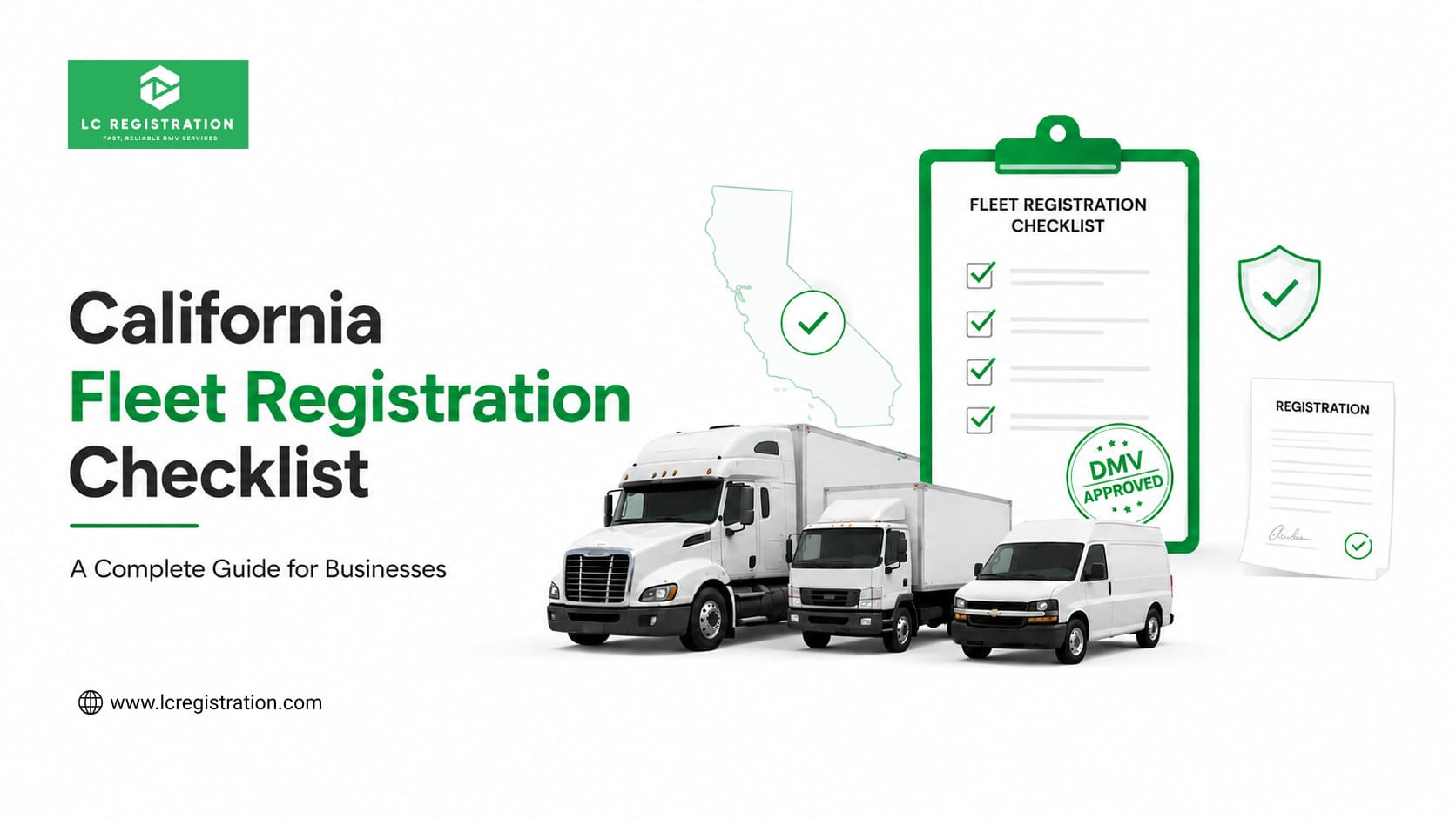
- Enroll in California’s PFR program. The DMV California’s Permanent Fleet Registration program eliminates individual renewal notices and replaces them with a monthly consolidated listing. Vehicles get permanent license stickers instead of yearly ones. You only need 25 or more qualifying vehicles to enroll directly. If you go through an authorized registration service agent, they can enroll you as long as their combined managed fleets total 125+ vehicles. If you qualify, this program alone can dramatically reduce administrative chaos.
- Track compliance deadlines per vehicle. Don’t rely on DMV mail notices, they go to the address on file, get buried, and arrive late. Use fleet management software or a compliance calendar to track every vehicle’s renewal and emissions deadline independently.
- Test emissions early. Schedule emissions tests 90 days before each vehicle’s compliance deadline. This gives you a buffer to identify failing vehicles, make repairs, and retest, all before a hold is triggered.
- Digitalize all compliance records. Insurance certificates, emissions test results, and court clearances should all be stored digitally and made instantly accessible. When a hold hits, you don’t have time to dig through filing cabinets.
- File REG 138 within 5 days of any vehicle sale. When you sell a fleet vehicle, you have five days to submit a Notice of Transfer and Release of Liability (REG 138) to the DMV. Miss that window, and you could be held responsible for the violations the new owner racks up.
- Keep your Motor Carrier Permit (MCP) current. Every intrastate commercial carrier operating in California needs an active Motor Carrier Permit. A lapsed MCP is another compliance trigger that can compound registration issues.
Ready to Get Your Fleet Back on Track? LC Registration Is Here to Help
Staying compliant in California takes more than good intentions, it takes the right partner. At LC Registration, we specialize in comprehensive fleet vehicle registration services that help operators across California cut through the DMV process, clear holds fast, and stay ahead of compliance so the same problem never hits twice.
From single-vehicle holds to managing registration across an entire fleet, we handle the paperwork, the deadlines, and the follow-ups, so you can focus on running your business.
Don’t navigate the California DMV registration hold alone. Reach out to LC Registration today and let’s get your fleet sorted.
Frequently Asked Questions
What is a California DMV registration hold?
A registration hold freezes your vehicle’s status with the DMV. You can’t renew, transfer, or legally operate it until the hold is cleared. For fleets, this can mean multiple vehicles going offline at once.
What's the most common reason fleets get a registration hold in California?
Right now, it’s SB 210/Clean Truck Check noncompliance. If your heavy-duty vehicle isn’t registered in CTC-VIS, hasn’t paid its compliance fee, or hasn’t passed emissions testing, a hold is placed automatically.
Can unpaid tolls really trigger a DMV registration hold?
Yes. Toll agencies like TCA have a direct agreement with the California DMV. Unpaid violations get reported, and a hold is placed on the vehicle’s registration until the balance is fully resolved.
How long does it take to remove a DMV registration hold?
It depends on the hold type. Simple fee holds clear in a few days. SB 210 holds lift within 1-3 business days after CTC-VIS compliance is achieved. Court holds can take 1-4 weeks.
Will the DMV automatically send my registration tags after a hold is removed?
No. This is one of the most commonly missed steps. Once a hold is cleared, you must contact the DMV directly to complete your registration and obtain your tags.