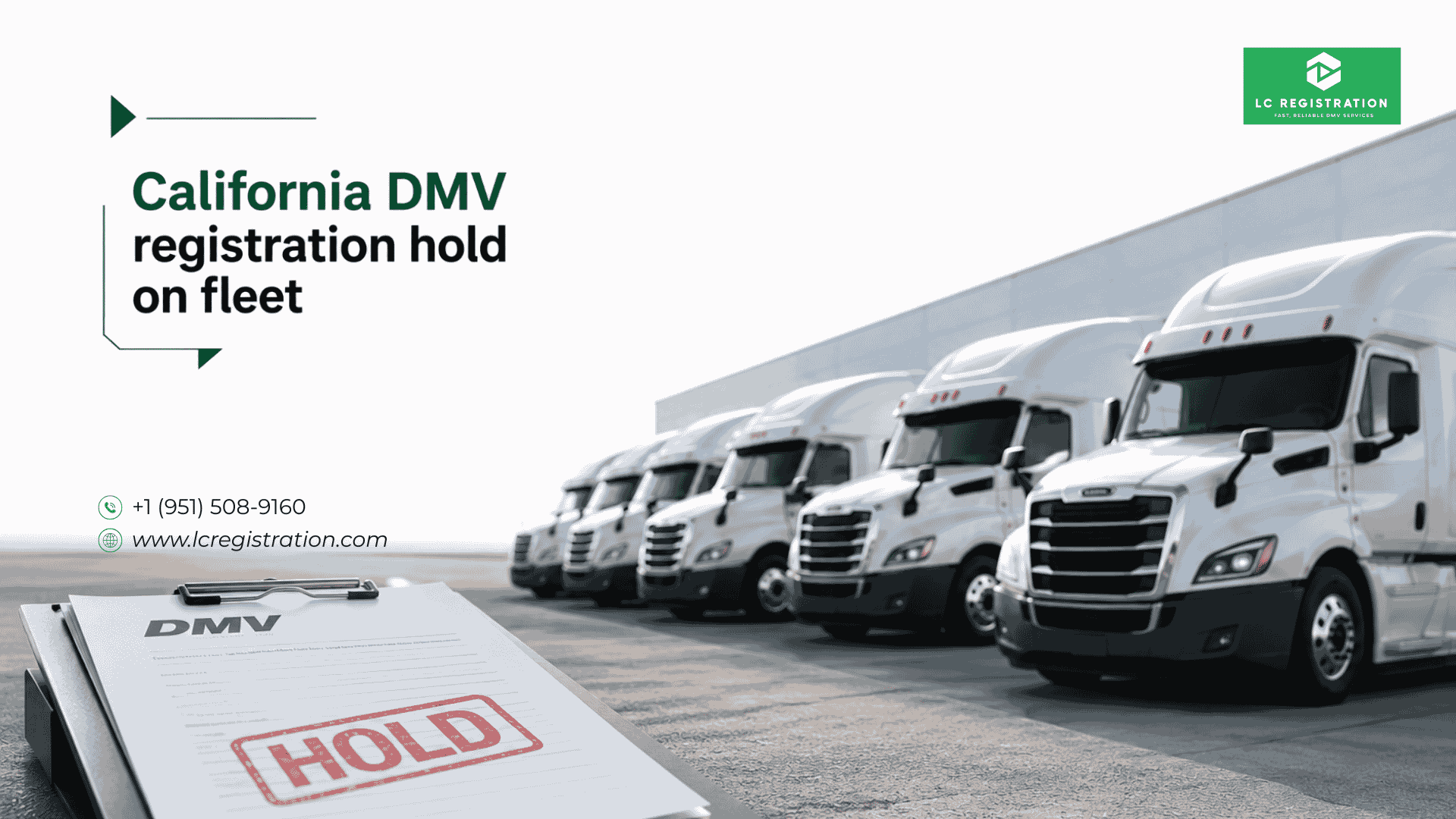
Did you just open your California DMV registration renewal notice only to see a dreaded “CARB Non-Compliant” or “SB 210 Hold” stamped on it?
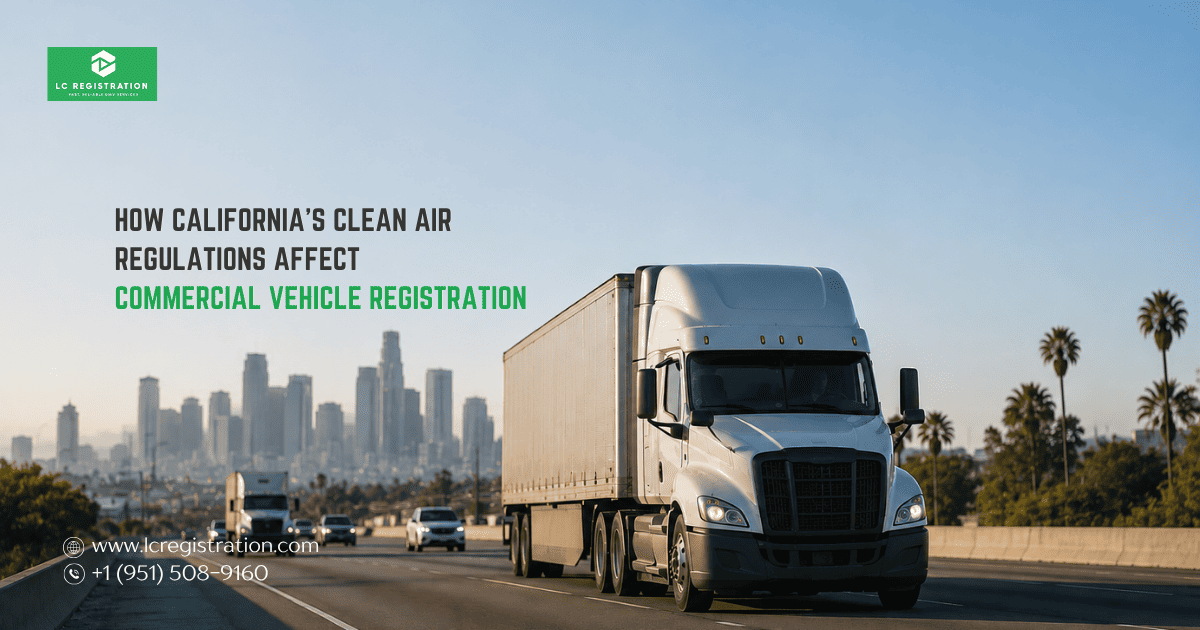
But you aren’t alone in getting it. Thousands of fleet owners and owner-operators across California are hitting a brick wall at the DMV. Under the Clean Truck Check (HD I/M) program, the California Air Resources Board (CARB) and the DMV are now directly linked. If your truck is flagged as non-compliant in CARB’s database, the DMV is legally blocked from issuing your registration stickers.
At LC Registration, we know you can’t afford costly downtime over database paperwork. Below, we break down exactly why your Clean Truck Check DMV registration renewal is blocked and the exact steps required to clear the hold and get your fleet back to work.
What Is the SB 210 Clean Truck Check Law, And Why Does It Block Your Truck Registration Renewal?
Passed under Senate Bill 210, California’s Clean Truck Check program, officially known as the Heavy-Duty Vehicle Inspection and Maintenance (HD I/M) Regulation, was approved by CARB in December 2021 and began active enforcement in 2024. It was designed to ensure that the emissions control systems on heavy-duty commercial vehicles function properly throughout the vehicle’s life, not just at the time of purchase.
The law created a direct digital link between CARB’s compliance database and the California DMV. CARB transmits an updated list of compliant and non-compliant vehicle VINs to the DMV every night. If your vehicle shows as non-compliant in CARB’s system when your registration renewal comes due, the DMV hold is placed automatically, no human review, no warning call, no grace period.
If you receive a DMV renewal refusal with error codes like Q212, it means your vehicle is marked as non-compliant in CARB’s Clean Truck Check Vehicle Inspection System (CTC-VIS).
Who Does Clean Truck Check Apply To?
This is where many owners get caught off guard. The scope of Clean Truck Check is broader than most people realize.
Clean Truck Check applies to nearly all diesel, alternative-fuel, and hybrid vehicles with a Gross Vehicle Weight Rating (GVWR) over 14,000 pounds that operate on California public roads and highways, even if the vehicle is not registered in California.
Affected vehicles include:
- Commercial trucks and semi-trucks (owner-operators and fleet vehicles)
- Hybrid heavy-duty trucks and buses
- Transit, shuttle, and school buses
- Motorcoaches
- California-registered motorhomes used for recreation or emergency occupancy
- Agricultural vehicles meeting the definition under the regulation
- Government vehicles (federal, state, and local)
- Out-of-state trucks operating in California — if your truck crosses into California, you are subject to the same rules as in-state operators
- Single-vehicle fleets
- Vehicles with CA DMV-exempt license plates (SE plates and similar)
If you are an out-of-state operator, your compliance deadlines are tied to the last digit of your vehicle’s VIN rather than a California DMV expiration date. This is a common blind spot for interstate carriers who assume California rules don’t apply to them until they receive a roadside notice or are refused Clean Truck Check DMV registration renewal.
Important: You may submit your emissions test up to 90 days before your compliance deadline, not after. This window is designed to give you time to make repairs and retest if your vehicle initially fails. Missing your compliance window means a registration block at your next renewal.
The 3 Triggers Behind a DMV Registration Hold in California
CARB automatically triggers a registration freeze through the online Clean Truck Check Vehicle Inspection System (CTC-VIS) database for three primary administrative omissions. Knowing which one applies to you is the key to resolving the issue quickly.
The Cost of Delay: Strict Deadlines & Fast Penalties
California is notoriously strict about when a vehicle must enter its tax system.
- If you bought an EV from a private party: You have just 10 days from the date of sale to notify the DMV, and 30 days to pay the registration fees and use tax before late penalties apply.
- If you moved to California from out of state: You must register your vehicle within 20 days of establishing residency or accepting employment in the state.
If you miss these windows, the DMV hits you with immediate, escalating penalties. Original registration late fees include an immediate $34 registration penalty and an additional $34 CHP penalty, plus compounding percentages of your Vehicle License Fee.
Skip the DMV Headaches: Let LC Registration Onboard Your EV
Trying to accurately balance county sales taxes, calculate tiered 2026 value fees, and ensure your electric truck isn’t misclassified can turn a milestone vehicle purchase into a major administrative headache.
You don’t have to spend your valuable free time navigating complex state forms or waiting in line at a local field office. At LC Registration, we streamline the entire first-time electric vehicle registration in California. Our team verifies your vehicle’s motive power data codes, coordinates your physical out-of-state VIN verifications, and calculates your precise state fees in minutes.
Ready to skip the stress and hit the open road? Contact our expert team today to clear your pending title applications, secure your new California license plates, and get your vehicle registered quickly and correctly.
1. Incomplete Database Reporting
Before any fees can be paid or tests recorded, every vehicle must be fully accounted for in the official CTC-VIS portal. If your vehicle information (VIN, license plate, engine model year, and fleet ownership data) hasn’t been uploaded, the system automatically defaults your vehicle to non-compliant status.
2. Unpaid Annual Compliance Fees
Every covered vehicle must pay an annual regulatory compliance fee. This fee is adjusted slightly over time based on the Consumer Price Index (CPI), resulting in a compliance cost of $32.13 per vehicle. If this fee is overlooked or paid late, your vehicle status turns red instantly.
3. Missing or Overdue Periodic Testing Data
This is the issue tripping up most fleet operators. All non-exempt vehicles must undergo periodic emissions testing to prove they are operating cleanly. If you have missed your testing deadline, your status updates to non-compliant, and the DMV blocks your registration.
Crucial Warning on Testing Frequency: Testing requirements are strictly scheduled. Affected vehicles must undergo emissions testing semi-annually (twice per year). Your compliance testing due dates are directly mapped to your vehicle’s specific DMV registration expiration date. Furthermore, regulatory timelines state that this frequency will increase to quarterly (four times per year) for On-Board Diagnostics (OBD) equipped vehicles, making continuous tracking absolutely mandatory.
How Your Vehicle Testing Method is Determined
Not every truck is tested the same way. The specific testing methodology CARB requires depends heavily on your vehicle’s engine model year (EMY) and fuel type:
- OBD-Equipped Vehicles (2013+ Diesel, 2018+ Alternative Fuel): These vehicles must submit electronic data using a CARB-certified OBD testing device. The tester downloads data straight from your truck’s engine control unit (ECU) to check for active diagnostic trouble codes and malfunctioning emissions systems.
- Diesel Non-OBD Vehicles (2012 and Older): Because older heavy-duty trucks lack modern OBD infrastructure, they must pass a traditional SAE J1667 smoke opacity test alongside a physical, visual inspection of the vehicle’s original emissions control components.
- Alternative Fuel Non-OBD Vehicles (2017 and Older): These vehicles are exempt from smoke opacity testing but must still pass a thorough visual inspection of their factory emissions equipment.
Understanding Testing Exemptions
While the scope of the program is wide, a few narrow exemptions exist. Zero-Emission Vehicles (ZEVs), such as battery-electric or hydrogen fuel cell trucks, are completely exempt from testing. Additionally, certain authorized emergency vehicles, military tactical units, and historic vehicles do not participate. Note that personal-use diesel motorhomes registered in California are required to participate, though they remain on a relaxed annual testing cycle rather than a semi-annual one.
The Step-by-Step Fix to Clear a CARB DMV Registration Hold
If your vehicle got a DMV registration hold in California, you must resolve your account compliance directly with CARB. The DMV cannot override a CARB mandate manually. Follow this exact procedural checklist to clear your status:
1. Log Into your CTC-VIS Portal Account
Access your fleet profile on the official CARB Clean Truck Check database. Locate the specific vehicle showing a red “Non-Compliant” status flag. Review the line-item details to confirm if you are blocked due to an unpaid compliance fee, a missing emissions test submission, or a broader data reporting error.
2. Settle All Outstanding Compliance Fees
If the database shows a balance due, pay the $32.13 annual fee instantly through the secure CARB portal using an e-check or commercial credit card. Do not mail physical checks or submit payments through other unrelated CARB accounting portals, as doing so will halt automated verification and can trap your registration in limbo for weeks.
3. Schedule and Pass Your Emissions Test
If an emissions test is due, coordinate immediately with a CARB-credentialed tester utilizing a certified testing device. Ensure your dashboard has no active Malfunction Indicator Lights (MIL) or Check Engine lights before the hookup. The tester will transmit the passing diagnostic metrics directly to CARB’s centralized network.
4. Download the Certificate of Compliance
Once the portal processes your payment and records your passing test data, your vehicle status will update to a green “Compliant” display. The portal will generate an official Certificate of Compliance. At this point, CARB sends an automated electronic clearance to the DMV, allowing you to successfully finalize your registration renewal.
A Note on Roadside Remote Monitoring (PEAQS):
Be aware that CARB actively utilizes roadside monitoring technology called Portable Emission Acquisition Systems (PEAQS). These remote sensors screen passing trucks for high emissions in real-time. If a truck is flagged by a roadside sensor, the owner will receive a “Notice to Submit to Testing” (NST) in the mail.
If you receive an NST, you have exactly 30 calendar days to fix any issues and submit a passing test through a credentialed tester, or a severe DMV hold will be applied immediately regardless of your normal registration schedule.
Partner with LC Registration to Bypass CARB Bureaucracy and Clear Your Hold Now
Navigating the complex CARB portal, coordinating periodic emissions testing, and waiting out unpredictable data sync delays between state databases can paralyze your operations. Every day your rig sits idle due to unresolved paperwork, your business loses revenue.
As a trusted California fleet truck registration service, LC Registration takes the burden off your desk. We specialize in rapidly clearing DMV registration holds, settling state compliance fees, tracking your testing deadlines, and finalizing your registration renewal.
Let our commercial vehicle compliance experts clear your blocks quickly and professionally. Contact LC Registration today!
Frequently Asked Questions
What does "CARB Non-Compliant" mean on a DMV renewal notice?
It means your truck has been flagged by the California Air Resources Board for failing to meet the Clean Truck Check program requirements. The DMV is electronically blocked from renewing your registration or issuing stickers until you clear the hold in CARB’s online database.
What is the DMV error code for a Clean Truck Check hold?
The most common error code associated with a CARB or SB 210 registration hold is Q212. If your paperwork displays this code or references “HD I/M compliance,” you must resolve your standing within the CARB CTC-VIS portal before registration can proceed.
How much is the CARB Clean Truck Check compliance fee?
The annual compliance fee paid directly to the state through the CARB portal is $32.13 per vehicle. This fee is adjusted yearly based on the California Consumer Price Index (CCPI). Please note this fee is completely separate from what a private technician charges to perform the actual emissions test.
How often do I need to test my truck for Clean Truck Check compliance?
Heavy-duty vehicles subject to the regulation must undergo testing semi-annually (twice per year). Your specific compliance deadlines are directly linked to your vehicle’s DMV registration expiration date. Testing data can be submitted up to 90 days before your deadline.
Can out-of-state trucks get a California DMV registration hold?
While out-of-state trucks don’t register directly with the California DMV, they are still completely subject to Clean Truck Check requirements. If an out-of-state truck fails to report or pay fees, it can face severe roadside citations, California Highway Patrol (CHP) enforcement, and blocks on operating within state lines.