Repossession doesn’t end when the tow truck leaves. For many vehicle owners, and even buyers of repossessed vehicles, the more complicated chapter begins afterward, when the title question goes unanswered.
Who legally owns the vehicle now? Does repossession automatically transfer the title? And what does it actually take to properly release a lien in California?
These aren’t minor administrative details. An improperly handled lien release can freeze a title transfer, trigger DMV rejections, or leave a vehicle’s ownership in dispute for months. California has specific forms, firm deadlines, and distinct rules for paper versus electronic titles, and each step must be done in the right order.
This guide breaks down the full process for lien release after repossession in California, so you understand your position, your options, and exactly what needs to happen next.
Understanding Vehicle Liens in California
A lien on a vehicle title means a third party, typically a bank, credit union, or finance company, has a legal financial interest in the vehicle. Until the loan is fully paid, the lienholder is the legal owner, while the borrower is the registered owner. These are two distinct roles under California law.
California titles can be either paper-based or electronic. The Electronic Lien and Title (ELT) program is now the standard for most financial institutions, and this distinction matters significantly when it comes to releasing a lien — more on that below.
What Happens to the Title After Repossession?
The moment a vehicle is repossessed, ownership dynamics shift immediately. The lender takes full legal control of the vehicle and holds a Certificate of Repossession, which authorizes them to act on it.
From that point, the lender has three options:
- Sell the vehicle at auction to recover the outstanding debt
- Retain the vehicle for other purposes
- Offer the original owner a redemption opportunity
During this entire period, the title remains with the lienholder. The registered owner has no right to transfer, sell, or use the vehicle until the situation is resolved.
The Redemption Window: Can You Get Your Car Back?
California law gives the original owner a short window to reclaim a repossessed vehicle. If a lender repossesses the car, they must provide at least 15 days’ written notice before selling it, giving the owner a chance to pay the outstanding balance and repossession costs to get the car back.
In other cases, such as a vehicle sold through a public lien sale by a tow yard or storage facility, there is a 10-day post-sale redemption period where the original owner can still reclaim the vehicle by paying all costs and fees.
Acting within these windows is critical. Once they close, the right to redeem expires, and the new buyer receives a clear path to the title. If you are the original owner, do not wait, contact the lienholder immediately to get a payoff figure in writing.
How the Lien Release Process Works in California
Once the debt is resolved, either through sale proceeds or owner redemption, the lien must be formally released before a clean title can be issued. Here’s how it works step by step:
- Loan is satisfied — the lender confirms the debt is paid or the auction proceeds cover the balance
- Lienholder releases interest — the lender signs off on the release of their claim
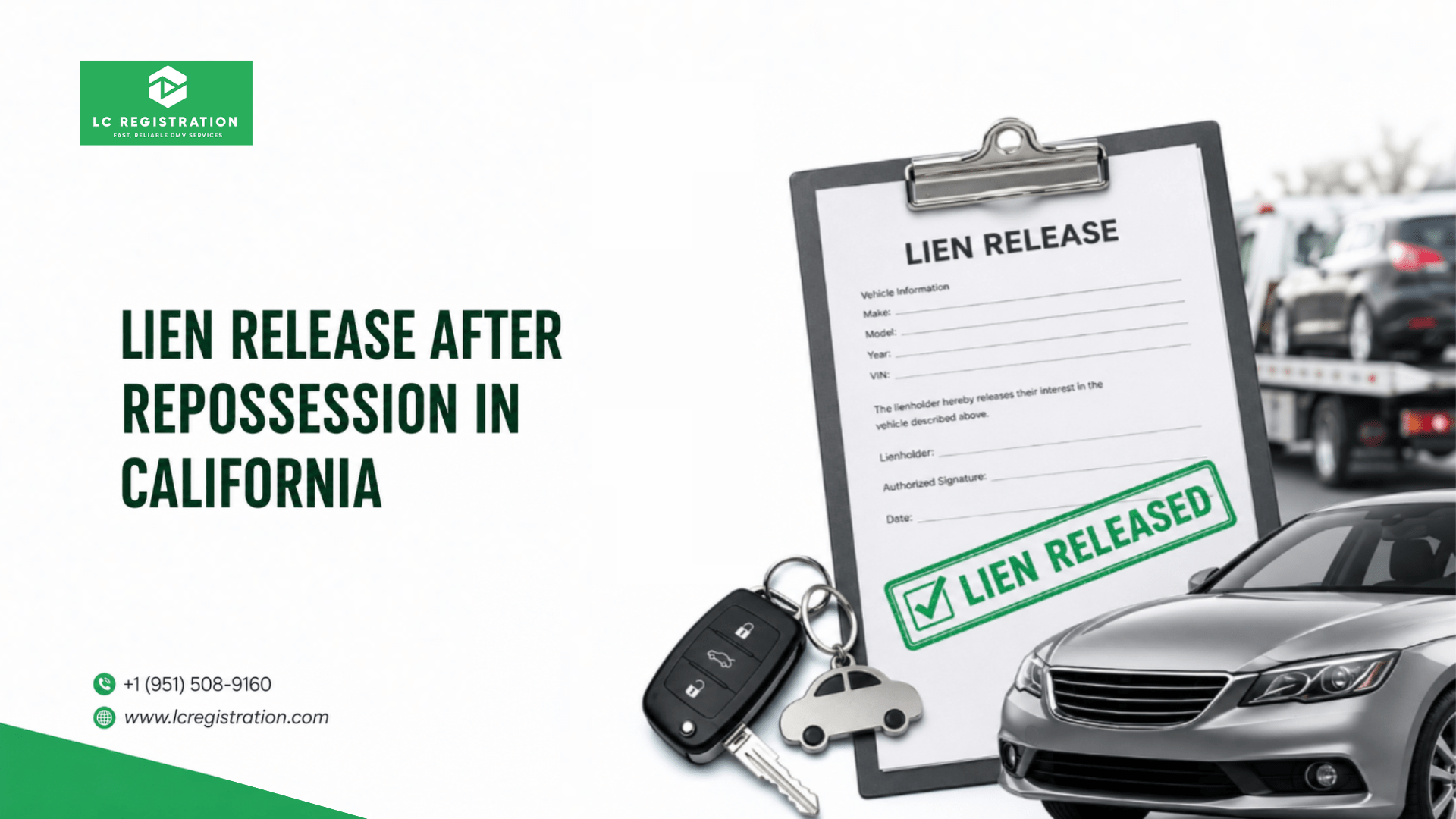
- Submit REG 166 (Lien Satisfied/Title Holder Release) — this form documents the release and must be notarized
- Submit REG 227 (Application for Duplicate or Paperless Title) — required if the title was lost or a duplicate title application is needed
- Pay the $15 DMV transfer fee
- A New Certificate of Title is issued in the appropriate owner’s name
One important rule: once you receive the released title, you have 30 days to submit it to the DMV. Missing this deadline means starting the process over.
Paper Title vs. Electronic Title (ELT) - A Critical Difference
This is where many people make expensive mistakes. If your vehicle has an electronic (paperless) title, the REG 166 form cannot be used. The lienholder must process the lien release entirely through the ELT program.
Similarly, the standard REG 227 cannot be used for ELT vehicles, a separate REG 227 ELT form applies, and only the lienholder can submit it.
Before filing any paperwork, confirm whether your lienholder is enrolled in California’s ELT program. Using the wrong form on an ELT vehicle will result in an automatic rejection by the DMV.
Who Actually Owns the Title?
To understand who owns the title, it helps to know how California handles lien sales and releases after repossession.
Scenario | Who Owns the Title? |
Loan active, no repossession | Lienholder |
Vehicle repossessed, not yet sold | Lender (lienholder) |
Sold at auction | New buyer (after new title issued) |
Owner redeems after repossession | Registered owner (after lien release) |
Loan fully satisfied post-repossession | Registered owner |
In short: the title follows whoever holds the legal interest. Until that interest is formally released and recorded with the DMV, ownership is not officially transferred, regardless of who physically has the car.
Common Mistakes to Avoid
- Missing the 30-day window: after receiving a released title, this is one of the most common and easily avoidable errors
- Using REG 166 on an ELT vehicle: it will be rejected, causing delays
- Submitting forms without proper notarization: California requires notarized signatures on most title release documents
- Assuming repossession clears the title automatically: it does not; a formal lien release and DMV filing are always required
How LC Registration Can Help
Completing a lien release after repossession in California involves multiple moving parts: the right forms, proper notarization, ELT compliance, and DMV deadlines, leaving little margin for error. Managing all of this while dealing with the financial and emotional weight of a repossession is a lot to take on alone.
At LC Registration, we handle it all. Our services include:
- Lien release processing (REG 166 and REG 227)
- Title transfers after repossession
- Duplicate title applications
- ELT vs. paper title guidance
Instead of waiting in DMV lines or risking a rejected filing, let us make sure your paperwork is done right the first time.
Contact LC Registration today; we handle the paperwork so you don’t have to.
Does repossession cancel my title?
No. Repossession transfers control to the lender, but the title remains active. It must go through a formal lien release and DMV filing before it transfers to anyone else.
How long does a lien release take in California?
Processing times vary, but once all documents are correctly submitted, the DMV typically issues a new Certificate of Title within a few weeks.
What if my lienholder won't release the lien?
If the debt has been satisfied and the lienholder is unresponsive or out of business, you may need to pursue a court order or work with the DMV’s Financial Institution Locator for guidance. A registration service or attorney can help navigate this.
Can I sell a car that still has a lien on it?
Not cleanly. A lien must be released before you can transfer a clear title to a buyer. Attempting to sell without resolving the lien creates legal and financial risk for both parties.