California DMV eTitles have changed the way vehicle ownership is documented across the state, and if you recently paid off your auto loan or purchased a financed car, you might be wondering where your physical pink slip is. In years past, receiving a paper Certificate of Title in the mail was standard protocol. Today, however, many California drivers are surprised to learn that their vehicle title exists only in digital form through the California DMV’s electronic title system.
California has modernized its vehicle registration system through the Electronic Lien and Title (ELT) program. While a California DMV eTitle carries the same legal weight as a paper pink slip, the transition to digital records can create confusion during private sales, state-to-state moves, or loan payoffs. In fact, after implementing eTitles for vehicles over the past 6 months, we found it reduced processing times by about 30% when handling DMV transactions, offering a more streamlined experience.
Understanding how eTitles work and knowing when you actually need a physical document will keep your next DMV transaction smooth and delay-free.
California Is Moving Toward Digital Vehicle Title Management
From online registration renewals to digital DMV services, California continues to modernize how vehicle records are managed. One change that often surprises vehicle owners is the growing use of electronic titles (eTitles).
Many drivers assume they’ll automatically receive a paper title after buying or paying off a vehicle. However, if your lender participates in California’s Electronic Lien and Title (ELT) Program, your title may exist only in the DMV’s electronic system until certain conditions are met.
Understanding how this system works can help you avoid delays during a California title transfer, vehicle sale, refinance, or lien release.
How the California ELT Program Works
The Electronic Lien and Title (ELT) program forms a secure digital bridge between financial institutions and the California DMV. It streamlines loan processing while eliminating the need to store physical paper documents in bank vaults.
When you finance a vehicle with a participating lender, the DMV assigns an electronic lien record attached to your Vehicle Identification Number (VIN). When you make your final loan payment, your lender transmits an electronic lien satisfaction notice directly to the DMV.
Once received, the DMV automatically triggers the generation and mailing of a clean paper title to your address on file, typically taking 3 to 7 weeks from your final payment date depending on lender processing speeds.
Paper Title vs. Electronic Title
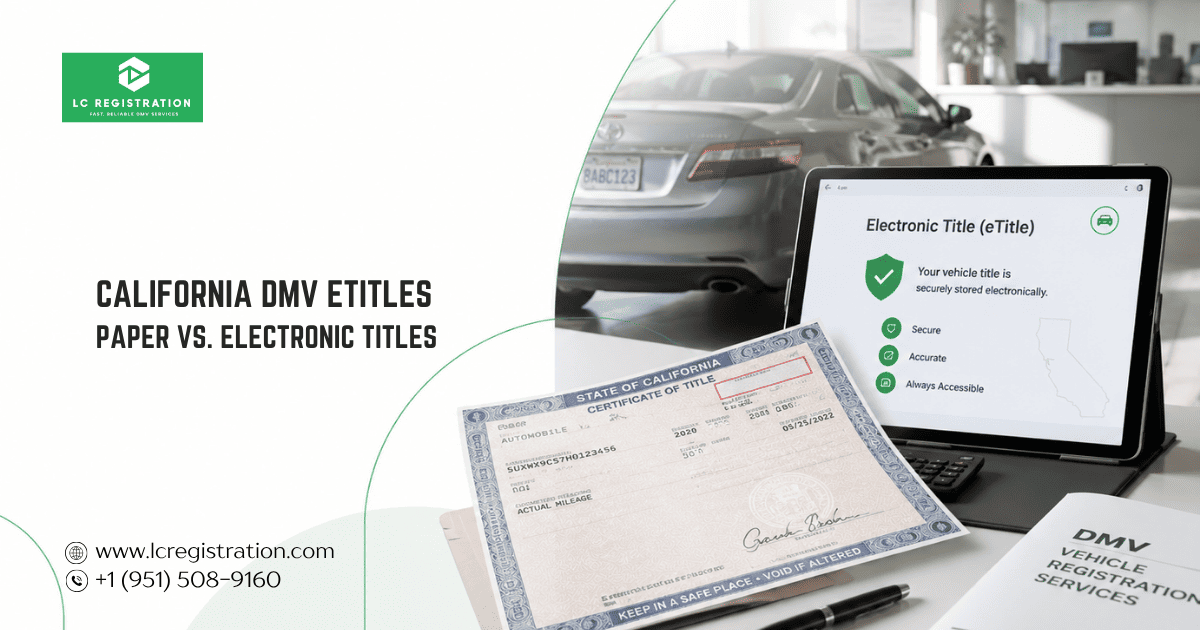
To help you understand how these two title formats compare, here is a breakdown of their primary differences:
Feature | Paper Certificate of Title | Electronic Title (eTitle) |
Physical Document | Printed paper (“pink slip”) | Digital database record at DMV |
Storage & Security | Must be physically secured by owner or lender | Stored digitally; cannot be lost, stolen, or damaged |
Primary Use Case | Private sales, gifted vehicles, out-of-state transfers | Financed vehicles with participating ELT lenders |
Lien Release Process | Lender signs Line 2 on paper title and mails it to owner | Lender sends electronic release notification directly to DMV |
Processing Speed | Requires manual mail handling and DMV processing | Automated lender-to-DMV communication |
Why Electronic Titles Benefit Vehicle Owners
Although holding a physical pink slip offers peace of mind for some drivers, digital titles deliver several practical advantages:
- Eliminates Lost Documents: A physical title can easily be misplaced during a home move or damaged over time. eTitles eliminate the expense and delay of requesting a duplicate title (Form REG 227) while a loan is active.
- Prevents Title Fraud: Physical titles can be altered or forged. Digital records managed directly through state databases significantly reduce fraudulent sales and unauthorized lien removals.
- Faster Lien Releases: Once your loan payoff clears, electronic transmission between your lender and the DMV happens in days rather than weeks, speeding up the generation of your clean title.
When You Still Need a Physical Paper Title
While the ELT program works seamlessly in the background, an eTitle cannot replace a paper document in every scenario. You will still require a physical paper title if you are:
- Selling your vehicle directly to a private buyer who needs a signed pink slip to complete the transfer.
- Registering or moving your vehicle to another state, as out-of-state DMVs require physical documentation to issue new plates.
- Securing a new loan or title loan where the secondary lender demands physical proof of ownership.
- Transferring ownership through inheritance or court order where physical endorsements are required.
- Handling a total loss or damaged vehicle, which requires surrendering physical titles as part of the formal California salvage title process.
Common Situations That Cause Title Delays
Even with digital management, administrative errors can stall vehicle transactions. The most frequent title bottlenecks include:
Unprocessed Lien Releases
Assuming a loan is released at the DMV the day you make your final payment. Lenders often take 1 to 4 weeks internally to transmit payoff data.
Outdated Owner Addresses
If you moved while paying off your loan, the DMV will mail your new paper title to your old address once the lien is satisfied.
Clerical Errors on DMV Records
Incorrect VINs, misspelled owner names, or mismatched addresses can halt title issuance. If you suspect an error on your title record, learn how to fix errors on a California vehicle title before starting a transfer.
How LC Registration Simplifies Your California Title Transfer
Navigating title statuses, lien releases, and DMV forms can quickly become overwhelming, especially when trying to complete a time-sensitive sale or transfer.
At LC Registration, we specialize in removing the frustration from California vehicle administration. Whether your title is paper or electronic, our team verifies your DMV records, checks for active liens, and ensures all paperwork is flawless before submission.
Our core services include:
- Online California Title Transfers: Skip the long DMV lines and handle ownership changes completely online.
- Duplicate Title Processing: Rapid assistance filing Form REG 227 if your paper title was lost, damaged, or never arrived.
- Lien Release Assistance: Guidance on securing official lien satisfaction records (Form REG 166) from difficult or non-responsive lenders.
- Out-of-State Title Transfers: Seamless conversion of out-of-state titles into official California registration and eTitles.
Final Thoughts
Digital vehicle titles represent a convenient step forward in modernizing California’s DMV, but they shouldn’t leave you guessing about your ownership rights. Knowing whether your vehicle has a paper title or an eTitle ensures you can plan when paying off a loan, selling to a private buyer, or moving out of state.
If you are dealing with a complex title situation, missing paperwork, or need to transfer ownership quickly, LC Registration is here to help. Contact our team today to get your California title transfer handled accurately and without the stress of traditional DMV waiting rooms.
Frequently Asked Questions
Is California completely getting rid of paper titles?
No. California continues to issue paper titles for vehicles without liens, private sales, and whenever a lienholder releases an electronic lien. The ELT program simply digitizes title storage while an active loan exists.
Can I sell my car if the title is still held as an eTitle?
You can, but the active loan must be satisfied first. The lender must submit an electronic release to the DMV so a paper title can be printed, or the transaction must be processed with special DMV forms ensuring the lien payoff is completed.
How do I check if my title is paper or electronic?
If your car was financed through a bank or credit union, it is likely an eTitle. You can confirm your status by reviewing your registration card or contacting a licensed registration service like LC Registration to check DMV database records.
Does an eTitle have the same legal value as a paper title?
Yes. The California DMV gives electronic titles the same legal validity as physical paper Certificates of Title.