Purchasing a vehicle is an exciting milestone, but navigating California DMV requirements can quickly turn that excitement into frustration. Whether you are buying a brand-new car off a dealership lot or picking up a used sedan from a private seller, the way you acquire your vehicle completely dictates your registration process, tax obligations, and title transfer timeline.
Understanding who handles the paperwork, how California calculates vehicle taxes, and what documents are required will protect you from unexpected DMV penalties, invalid transfers, and registration delays. Here is everything you need to know about buying a vehicle from a California dealership versus a private seller.
2026 California DMV Digital Registration Update
California continues to expand its Electronic Lien and Title (ELT) and Business Partner Automation (BPA) systems. While dealerships process title transfers instantly through digital DMV networks, private party buyers must manage transfer paperwork manually within strict statutory deadlines to avoid late transfer fees.
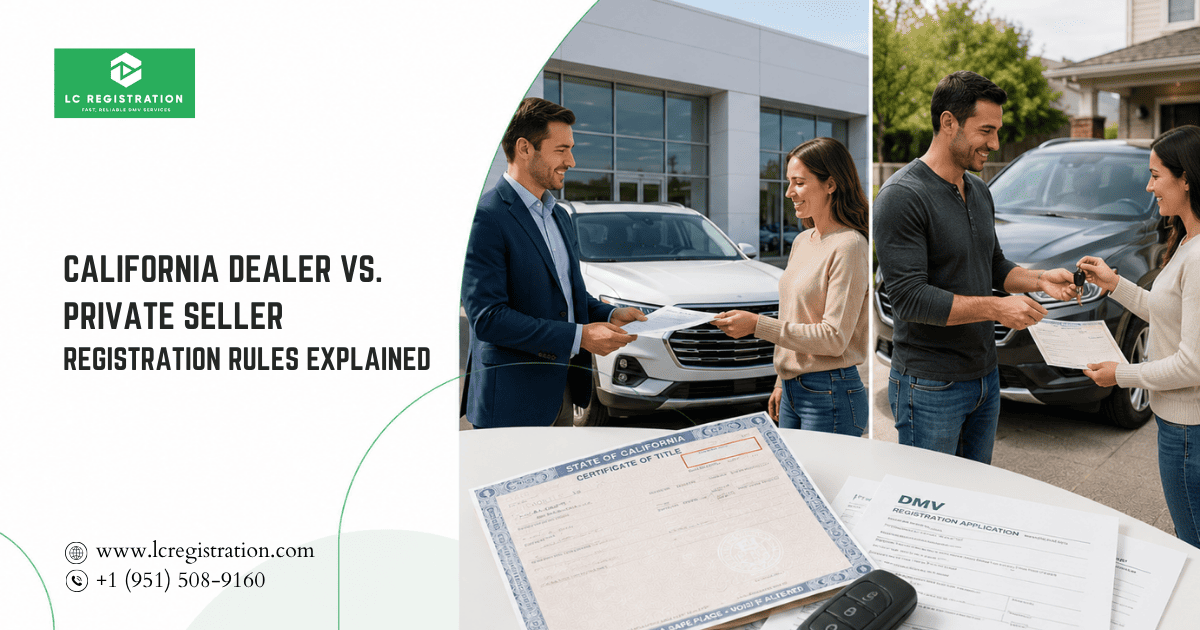
Head-to-Head Comparison: Dealer vs. Private Seller
The choice between a dealership and a private party involves clear trade-offs between convenience and cost. The table below illustrates how the registration process differs between the two buying methods:
Feature | California Dealer Purchase | Private Seller Purchase |
DMV Paperwork Handling | Completed on-site by the dealership via electronic DMV access | Managed entirely by the buyer |
Sales / Use Tax Payment | Collected by dealer at purchase | Paid directly to the DMV during transfer |
Smog Certification | Dealer legally mandated to provide passing smog | Seller legally required to provide smog (< 90 days old) |
Drive-Off Authority | Immediate temporary digital license plate issued | Requires active registration or temporary permit |
Transfer Deadline | Processed prior to vehicle release | Buyer must transfer title within 10 days |
Documentation Fees | Capped at $85 by California law | None (only official DMV transfer and registration fees) |
Who Handles DMV Registration?
The Dealership Process: Turnkey Convenience
When you buy a car from a licensed California dealership, the registration process is largely hands-off. Dealerships participate in the DMV’s Business Partner Automation system, allowing them to submit title applications and collect state registration fees at the point of sale.
Before you drive off the lot, the dealer issues a temporary registration card and temporary license plate. The dealership then submits your final paperwork to the state, and the DMV mails your permanent plates and registration card directly to your home address within 2 to 4 weeks.
The Private Party Process: Buyer Responsibility
In a private seller transaction, the DMV delegates all responsibility to the buyer and seller. The seller is legally required to provide a passing smog certificate (unless the vehicle is 4 model years old or newer, or pre-1975) and submit a Notice of Transfer and Release of Liability (Form REG 138) to the DMV within 5 days.
As the buyer, you are responsible for securing the physical title, validating the vehicle identification number (VIN), paying use tax, and completing the official California title transfer within 10 days of purchase.
Title Transfer Differences and Required Documents
Failing to secure the proper documentation during a sale is the primary cause of rejected registration applications.
Dealer Purchase Documents
Dealerships assemble a complete paperwork bundle for you, including:
- Vehicle Purchase Contract & Bill of Sale: Detailing the final price, financing, and trade-in values.
- Application for Registration (REG 51): The official report of sale.
- Temporary Identification: Posted on the front windshield for legal driving.
Private Seller Documents
When buying from a private individual, you must ensure you collect:
- California Certificate of Title: Signed by the seller on Line 1. If the vehicle was financed, the lender must also sign Line 2 to release the lien.
- Bill of Sale (Form REG 135): Signed by both parties to establish the official purchase price.
- Odometer Disclosure (Form REG 262): Required for all vehicles 10 model years old or newer.
- Valid Smog Certificate: Issued within the last 90 days.
If the seller has lost their physical title, they must sign a Application for Replacement or Transfer of Title (Form REG 227). However, if the vehicle was previously deemed a total loss, you must ensure the paperwork accurately follows the official California salvage title process before finalizing the purchase.
Understanding Registration Fees and Taxes
Use Tax vs. Sales Tax
Whether buying from a business or an individual, you must pay California tax on your vehicle purchase. Dealerships collect sales tax at checkout, whereas private buyers pay “Use Tax” directly to the DMV during the title transfer. Tax rates are based on the buyer’s residential address, not where the vehicle was purchased.
The California Trade-In Tax Rule
A common misconception among car buyers is that trading in a vehicle reduces sales tax. In states like Texas or Florida, if you buy a $30,000 car and trade in a $10,000 car, you only pay tax on the $20,000 difference.
California does not allow trade-in tax credits. In California, sales tax is calculated on the full $30,000 purchase price before any trade-in allowance or manufacturer rebate is applied.
Common Mistakes Buyers Make (And How to Avoid Them)
Navigating private sales requires vigilance. Avoid these frequent paperwork mistakes:
- Buying Without a Smog Check: Never complete a private purchase assuming you can fix emissions issues later. If the car fails smog, you cannot register it in California.
- Missing the 10-Day Transfer Window: The DMV assesses late penalties if you wait longer than 10 days to initiate the title transfer.
- Incomplete Title Signatures or Clerical Errors: Erasing mistakes or crossing out names on a pink slip invalidates the document. If you encounter administrative mistakes on your paperwork, review our guide on how to fix errors on a California vehicle title to resolve issues quickly.
How LC Registration Simplifies Private Sales
While buying from a private seller often yields a better purchase price, the burden of DMV paperwork can turn into a time-consuming hassle. You do not have to spend your morning waiting in long DMV lines to complete your transfer.
At LC Registration, we specialize in fast, hassle-free California registration solutions. Our team verifies your documents, calculates exact DMV fees, and ensures your title transfer is submitted accurately.
Final Thoughts
Choosing between a dealership and a private seller comes down to balancing convenience against cost. While dealerships manage the administrative burden for you, private sales offer great savings—provided you manage the DMV title transfer correctly.
If you are planning to purchase a vehicle from a private seller or need help clearing complex title issues, LC Registration is here to streamline the process. Contact our team today to complete your California vehicle registration quickly, accurately, and stress-free.
Frequently Asked Questions
Does the dealer register my car automatically?
Yes. Licensed California vehicle dealers process registration electronically at purchase and issue a temporary operating permit on-site.
Do I need to visit the DMV after buying a car from a private seller?
Not necessarily. While you must submit your paperwork within 10 days, you can skip the DMV office completely by using a licensed registration service like LC Registration.
How long do I have to transfer the title after a private purchase?
California law mandates that buyers initiate the title transfer within 10 days of the purchase date to avoid statutory late fees.
Who is responsible for the smog check in a private car sale?
By California law, the seller is required to provide a valid smog certification issued within 90 days prior to the sale date.