Getting a salvage vehicle back on California roads takes more than a standard trip to the DMV. Once an insurance company declares a vehicle a total loss, whether due to a collision, flood, theft, or fire, it loses its regular title and enters a separate legal category that requires its own path back to road-legal status.
That path is the California salvage title process, and understanding it upfront can save you significant time, money, and frustration. This guide walks you through every step, from what a salvage designation actually means to completing your inspections, submitting the correct paperwork, and keeping your registration up to date.
Understanding Salvage Titles in California
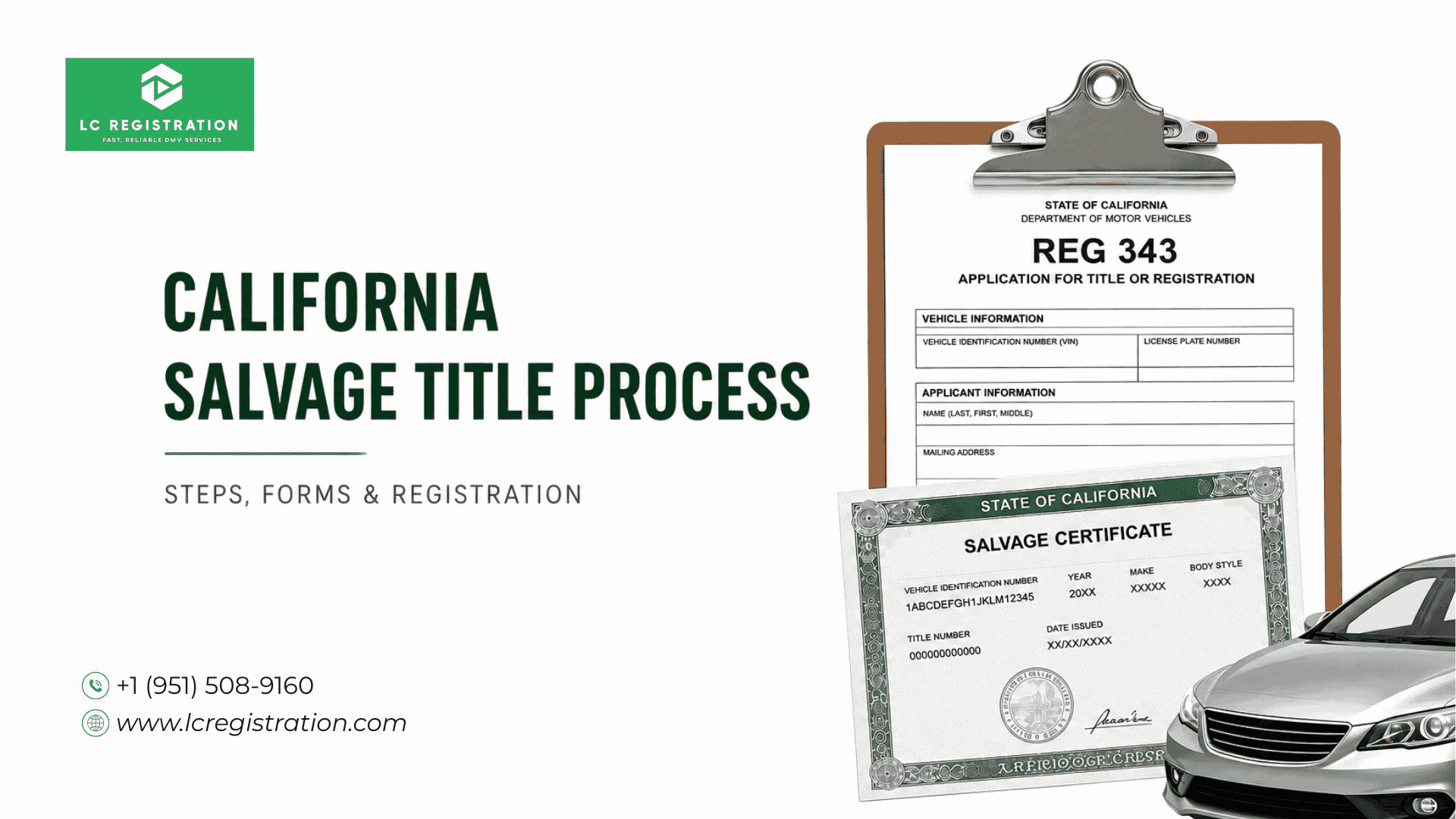
When an insurance company declares a vehicle a total loss, typically when repair costs exceed a certain percentage of the vehicle’s market value, the California DMV issues a Salvage Certificate in place of the standard title. This certificate essentially flags the vehicle as non-operational and non-registerable in its current state.
Salvage Vehicle vs. Revived Salvage Vehicle
These two terms are often confused, but they represent very different legal statuses:
- A Salvage Vehicle has been declared a total loss and holds a Salvage Certificate. It cannot be driven on public roads or registered for road use until it has been properly repaired and inspected.
- A Revived Salvage Vehicle is a salvage vehicle that has been repaired, inspected, and approved by the DMV. Once it clears all required steps, it receives a Revived Salvage title and can be legally registered and driven.
Common Reasons a Vehicle Gets a Salvage Designation
- Severe collision damage
- Flood or water damage
- Fire damage
- Theft recovery where damage occurred during the theft
- Hail damage declared a total loss by the insurer
Step-by-Step: The California Salvage Title Process
The process involves several distinct steps, each of which must be completed in order. Skipping or rushing any step can result in delays or rejection of your application.
Step 1: Obtain the Salvage Certificate
If the vehicle was declared a total loss by an insurance company, the insurer is typically responsible for submitting the salvage certificate paperwork to the DMV. If you purchased the vehicle from a salvage auction or private seller, make sure the Salvage Certificate is transferred to your name before proceeding.
Step 2: Repair and Rebuild the Vehicle
Once you have the Salvage Certificate, the next step is to repair the vehicle to roadworthy condition. California does not have a prescriptive list of every repair that must be made, but the vehicle must pass a CHP inspection (covered in Step 5), so the repairs need to be thorough and legitimate.
A few important points to keep in mind during repairs:
- Keep all receipts for parts and labor. You will need to document what was replaced and where the parts came from.
- If you use non-OEM or used parts, note their source. The CHP inspector will want to verify that no stolen parts were used in the rebuild.
- Take photographs throughout the repair process. While not always required, they serve as valuable supporting documentation.
Step 3: Complete Form REG 343 (Salvage Vehicle)
Form REG 343 for Salvage Vehicle California, officially titled the “Application for Title or Registration,” is the primary DMV form used to apply for a Revived Salvage title. (Note: The actual Salvage Certificate you received in Step 1 is a different document, usually Form REG 488C).
What information does Form REG 343 require?
- Vehicle identification number (VIN)
- Year, make, and model of the vehicle
- Description of repairs performed
- Parts used in the repair (including part numbers and sources where applicable)
- Owner’s information and signature
Step 4: Pass a Vehicle Safety Systems Inspection (VSSI) & Smog Check
Before submitting your application to the DMV, the vehicle must pass a Vehicle Safety Systems Inspection (VSSI) conducted by a DMV-licensed inspection station. (Note: You may still hear mechanics refer to this by its old name, the “Brake and Light Inspection,” but the Bureau of Automotive Repair recently updated the program to the VSSI).
The VSSI verifies that:
- All brake systems are functioning safely and properly.
- All lighting systems (headlights, taillights, turn signals) are operational and correctly aimed.
- The vehicle’s safety systems are intact and meet California’s basic on-road standards.
Once the vehicle passes, the inspection station will electronically send the certificate to the DMV and provide you with a physical VSSI Certificate to include with your application.
Don't Forget the Smog Check:
Unless your vehicle is strictly exempt (such as a fully electric vehicle), California almost always requires a passing Smog Check to register a revived salvage vehicle. It is highly recommended to get this done at the same time as your VSSI to save yourself an extra trip.
Step 5: Get a CHP Inspection
The California Highway Patrol (CHP) inspection is designed to verify that the vehicle is what it claims to be and that no stolen parts were used during the rebuild.
During the CHP inspection, an officer will:
- Verify the VIN on the vehicle against the Salvage Certificate
- Check the parts used in the rebuild against your documentation and receipts
- Inspect the vehicle’s structural integrity and general roadworthiness
- Confirm that the vehicle has not been pieced together from multiple vehicles (sometimes referred to as a “chop shop” assembly)
Step 6: Submit Your Application to the DMV
Once you have cleared the CHP inspection and brake and light inspection, you are ready to submit your full application to the DMV. You can do this in person at a local DMV office.
The DMV will review your application and documents. If everything is in order, they will process your application and issue a Revived Salvage Title.
Step 7: Receive Your Revived Salvage Title
Once the DMV approves your application, you will receive a Revived Salvage Title. It looks similar to a standard California vehicle title, but it will permanently display the “Revived Salvage” brand.
That branding stays with the vehicle regardless of future ownership transfers, repairs, or registrations. Any future buyer will see that designation, which is why it is important to be transparent when selling a revived salvage vehicle.
With the Revived Salvage title in hand, you can now register the vehicle, obtain insurance, and legally drive it on California roads. After that, vehicle registration renewal usually follows the same general process as it does for other registered vehicles in California, although you still need to stay current on any applicable smog and insurance requirements.
Documents You Need for the Salvage Title Process
Here is a quick-reference checklist of everything you will need to complete the California salvage title process:
- Salvage Certificate (transferred to your name)
- Completed Form REG 343
- Parts receipts and repair documentation
- Brake and Light Inspection Certificate
- CHP inspection approval
- Proof of ownership
- Valid government-issued ID
- Payment for DMV and inspection fees
Having all of these ready before heading to the DMV will save you time and prevent unnecessary delays.
How LC Registration Can Help
LC Registration handles California vehicle registration matters and helps clients navigate complex filing situations that go beyond a simple DMV transaction. While required inspections still need to be completed through the proper channels, getting expert help with your revived salvage paperwork can reduce delays, prevent missed documents, and make the California Salvage Title process far less stressful.
If your rebuilt vehicle is ready for the next step, LC Registration can help you organize the paperwork, review the filing requirements, and get the registration submitted correctly the first time. Contact us today to complete the process without delay or hassle.
Frequently Asked Questions (FAQs)
Can I drive a salvage vehicle on California roads?
No. A vehicle with a Salvage Certificate cannot be legally driven on public roads in California. It must go through the full revived salvage process and receive a Revived Salvage title before it can be registered and driven.
How long does the California salvage title process take?
The timeline varies depending on how quickly repairs are completed, how soon you can schedule CHP and brake and light inspections, and DMV processing times. On average, the process can take anywhere from a few weeks to a few months.
Can a salvage title be cleared in California?
No. Once a vehicle has been issued a Salvage Certificate in California, the salvage history is permanent. Even after completing the revived salvage process, the title will always carry the “Revived Salvage” brand.
Does a revived salvage title affect resale value?
Yes, significantly. A revived salvage vehicle typically sells for considerably less than a comparable clean-title vehicle — often 20% to 40% less, depending on the make, model, and quality of the rebuild.
What happens if I buy a car with a salvage title without knowing?
If you purchased a vehicle and later discovered it had an undisclosed salvage history, you may have legal recourse against the seller for misrepresentation. Consult a consumer protection attorney and report the issue to the California DMV.
Is Form REG 343 required for all salvage vehicles?
Yes, Form REG 343 is a required part of the California salvage title process for any vehicle seeking a Revived Salvage title. It must be completed accurately and submitted along with the rest of your documentation.