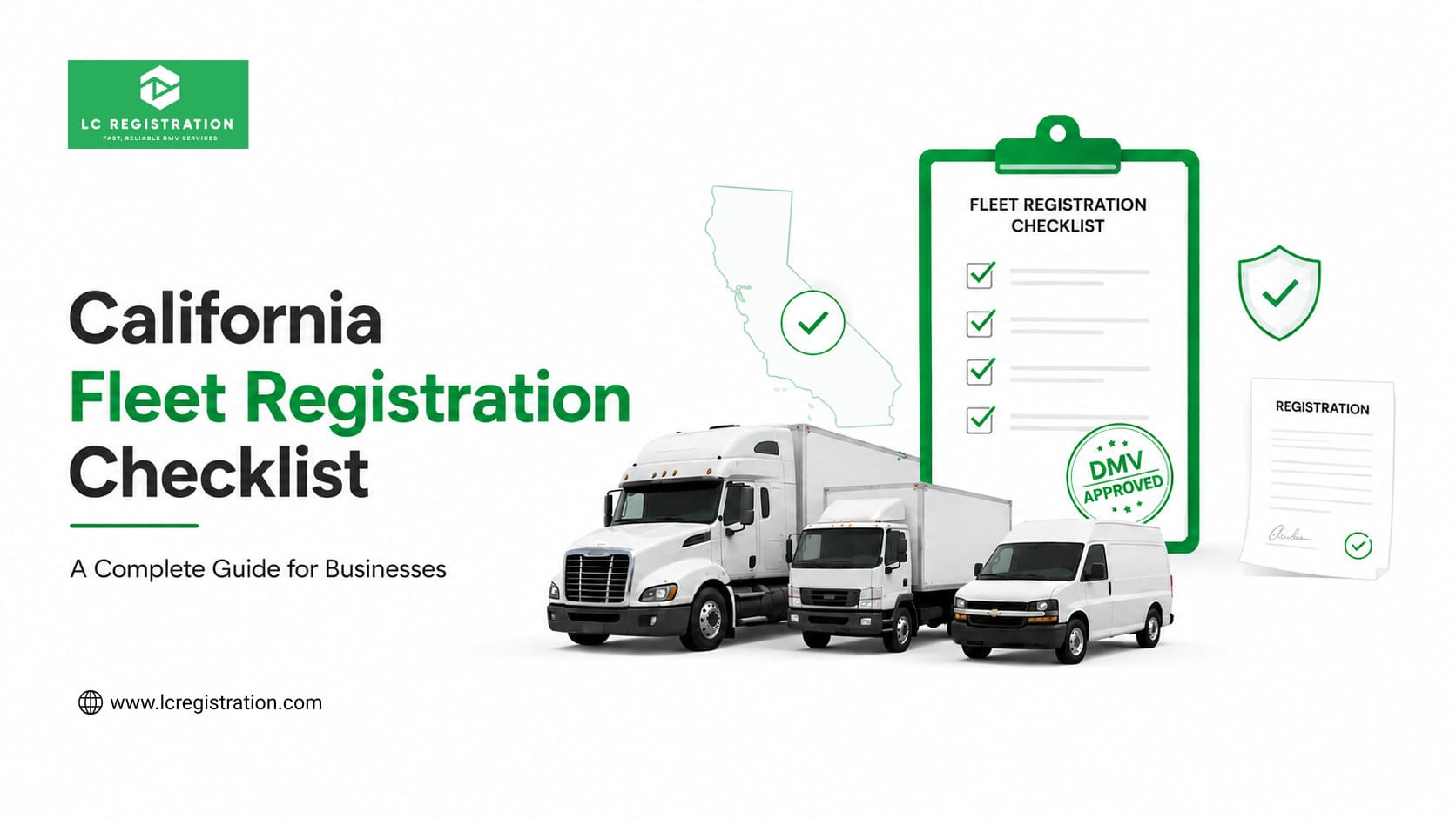
For trucking companies operating in California, fleet registration is far more complex than filing paperwork and paying a fee. It requires strict coordination between the California Department of Motor Vehicles (DMV), the California Air Resources Board (CARB), and, in many cases, multiple state jurisdictions for carriers that cross state lines.
Every general fleet registration checklist tells you the same thing: gather your title, proof of insurance, and pay your fees. For standard annual registration, that might be enough. For Permanent Fleet Registration in California, it is nowhere near sufficient.
PFR operates at the account level, not the vehicle level. That distinction changes everything. A documentation error on a single vehicle does not just delay that truck’s registration. It can create account-level flags that affect every vehicle in your PFR fleet during reconciliation. The DMV’s Fleet Unit scrutinizes PFR submissions differently, and the margin for error is significantly smaller than most fleet operators expect.
This California fleet registration checklist is not about the steps. It is about the precision required for the steps we mentioned in the Step-by-Step Process for Applying for Permanent Fleet Registration.
Fleet registration is a core operational process, and investing in the right fleet vehicle registration services directly affects how productively a fleet runs.
The PFR "Exact Match" Documentation Checklist
The word “exact” is not an exaggeration when it comes to PFR documentation. The DMV cross-references every piece of DMV fleet paperwork in your submission against your fleet account record. Here is what that means for each document category:
Vehicle Title and Ownership Records
Legal Entity Name - Character-for-Character Match
The business name on the vehicle title must be an exact match with the name on your DMV fleet account, your California Secretary of State (CA SOS) filing, and your Motor Carrier Permit, down to punctuation, abbreviations, and spacing. “ABC Trucking Inc.” and “ABC Trucking, Inc.” are treated as two different legal entities by the DMV. A single misplaced comma will trigger a rejection.
Lienholder Information
If the vehicle carries a lien, the lienholder must be listed exactly as they appear in the financing agreement. An outdated lienholder name, common after bank mergers or portfolio transfers, will flag the title as inaccurate.
Out-of-State Titles
Vehicles transferred from another state require a VIN verification completed by a California-authorized inspector before the title can be accepted into a PFR account. Submitting without it is an automatic rejection.
Weight Documentation
Certified Scale Ticket - Not Manufacturer Specs
The Unladen Vehicle Weight (UVW) declared on your PFR application must be obtained from a certified scale ticket, not from the manufacturer’s published specifications. Modified, upfitted, or repainted vehicles frequently weigh more than factory specs indicate. An incorrect UVW declaration places the vehicle in the wrong PFR weight group.
Weight Group Consistency Across the Fleet Account
PFR vehicles are grouped and billed by weight class at the account level. If a vehicle is assigned to the wrong weight group, it does not just affect that vehicle’s fee — it triggers a discrepancy in the fleet account’s weight group totals that can prompt an audit of your entire UVW declaration history.
Post-Modification Weight Verification
Any vehicle that has undergone body modifications, equipment additions, or structural changes after its original registration must have a new certified scale ticket before being added to or renewed within a PFR account.
Business and Compliance Documentation
EIN and CA SOS Filing Alignment
Your Federal Employer Identification Number, California Secretary of State entity registration, and DMV fleet account must all reflect the same legal business name and entity type. A recent business restructuring, name change, or ownership transfer that has not been updated across all three creates a cross-agency mismatch that will block PFR processing.
Motor Carrier Permit - Active Status Confirmed
An expired or suspended MCP will block all PFR processing. Because MCP renewals take up to 30 days to process and the DMV sends notice only 45 days before expiration, the MCP must be renewed proactively, not reactively, to avoid any overlap with active PFR filings.
USDOT Number - Current and Active
For interstate carriers, the USDOT number must be active and registered to the same legal entity as the fleet account. A USDOT registered under a previous business name or structure will create a carrier identity mismatch.
Insurance Documentation
Named Insured - Exact Match Required
The named insured on the Certificate of Insurance must exactly match the registered fleet account owner’s name. Even a minor variation, “LLC” vs. “L.L.C.”, is grounds for rejection.
Effective Date Coverage
The policy’s effective date must cover the registration start date without a single day’s gap. Insurance policies renewed mid-registration cycle are a frequent source of COI date mismatches.
Coverage Minimums by Vehicle Type
California’s minimum liability coverage requirements vary based on vehicle weight and cargo classification. Confirm your policy meets the current DMV threshold for each vehicle class in your PFR account, not just the fleet average.
CARB TRUCRS Alignment
Fleet Account Mirror Check
Your DMV PFR fleet account and your CARB TRUCRS account must reflect identical vehicle information, the same VINs, the same fleet account name, and the same registered owner. A discrepancy between the two systems at the time of DMV submission triggers a cross-agency hold.
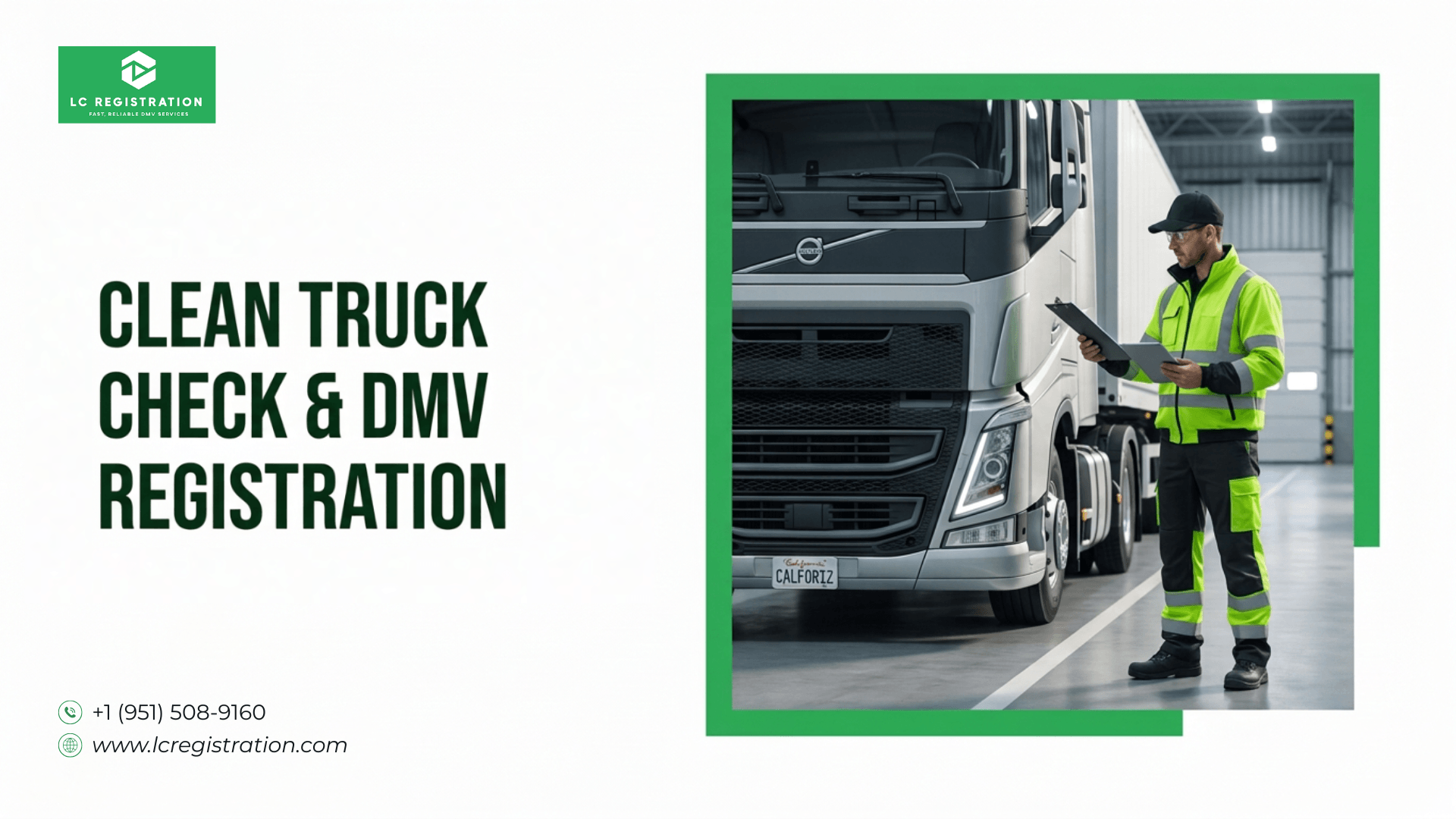
Clean Truck Check Compliance - Vehicle by Vehicle
Every vehicle in the PFR account must show current Clean Truck Check compliance status in TRUCRS before DMV registration can proceed. A CARB hold on even one vehicle in the fleet complicates account-level reconciliation.
1 to 3 Business Day CARB Clearance Window
After resolving a CARB compliance issue and paying all outstanding fees, it takes 1 to 3 business days for the clearance to update in the DMV’s system. PFR submissions must account for this window, submitting immediately after resolving a CARB hold, without waiting for the system to update, will still result in a rejection.
The Hidden Traps in PFR Account Maintenance
Most documentation mistakes in PFR are not made at initial commercial vehicle registration in CA. They accumulate over time, through routine account maintenance that quietly introduces inconsistencies, and then surface all at once during annual reconciliation.
Adding Vehicles to an Existing PFR Account
Every vehicle added to a PFR account requires a complete documentation package that aligns perfectly with the existing fleet account record. The DMV does not treat a new vehicle addition as a standalone transaction, it validates the new vehicle’s documentation against the entire account. Common traps include:
- A newly purchased truck whose title still reflects the previous owner’s name, pending transfer completion
- A leased vehicle where the lessor’s name on the title does not match the fleet account’s registered operator
- A vehicle added after a business restructuring, where the new entity name has not yet been updated in the DMV fleet account
Removing Vehicles From a PFR Account
Vehicle removals require formal processing through the DMV’s Fleet Unit. Informally taking a vehicle off the road without officially removing it from the PFR account leaves it active in the account record, accruing fees, requiring CARB compliance, and creating reconciliation discrepancies.
PFR Reconciliation - The Annual Pressure Point
PFR fleet accounts require periodic reconciliation, during which the DMV’s Fleet Unit reviews the account for consistency, outstanding fees, and compliance status across all vehicles. Unresolved discrepancies flagged during reconciliation can affect the registration status of the entire fleet account simultaneously, not just the vehicle where the discrepancy originated.
Why a Single PFR Rejection Threatens Your Entire Fleet Account
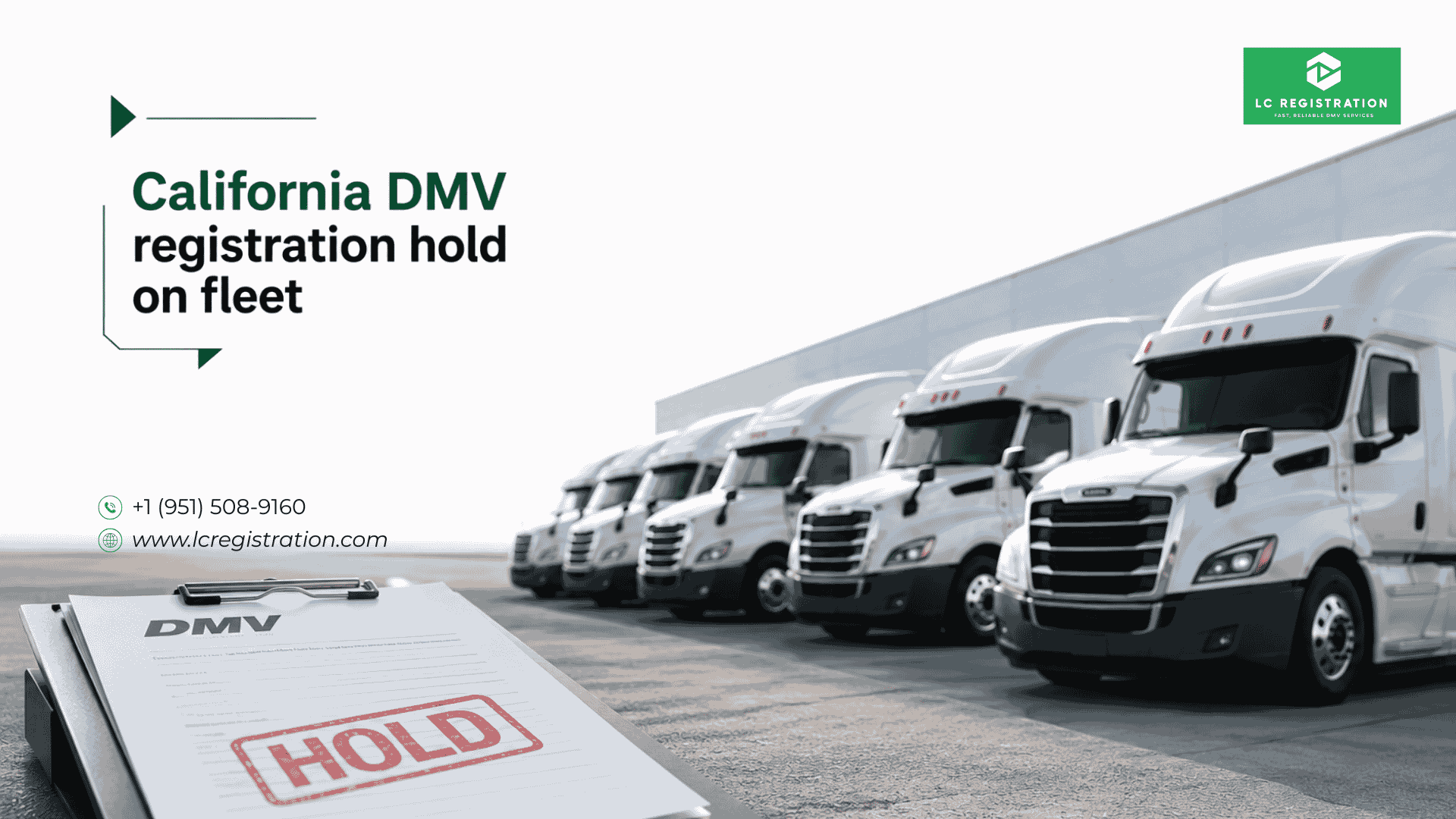
A rejected PFR application does not affect just one truck. Because PFR operates at the account level, a single rejection can trigger a chain of consequences across the fleet:
Operational Impact
- Vehicles pending registration cannot legally operate, creating immediate dispatch gaps
- Out-of-service orders can be issued during roadside inspections for trucks operating with expired registration while corrections are being processed
Financial Impact
- California late registration penalties for heavy commercial vehicles accrue from the expiration date, and do not pause while corrected applications are being processed
- IRP carriers face potential multi-state compliance flags if a California-based jurisdiction rejection delays apportioned registration renewal
Compounding Compliance Risk
- A rejected application that includes a CARB-related discrepancy means resolving issues with two separate agencies, CARB and the DMV, each with its own processing timelines
- During PFR reconciliation, an unresolved rejection can escalate to an account-level flag, affecting every vehicle in the fleet simultaneously
Let LC Registration Handle the Precision Work
California’s Permanent Fleet Registration process rewards precision and punishes approximation. The documentation requirements are not designed to be difficult, but they are designed to be exact, and that exactness creates the gap where most fleet operators run into problems.
At LC Registration, this is not a process we navigate occasionally. Ensuring flawless PFR compliance for California commercial fleets is our daily work.
Instead of hoping your paperwork passes the DMV’s red-flag test, our team guarantees it through:
Pre-Submission Documentation Review – Every document is cross-checked for name consistency, date accuracy, and format compliance before anything reaches the DMV
CARB TRUCRS Alignment – We confirm that your CARB fleet account and DMV fleet account mirror each other exactly before submission, eliminating cross-agency holds
Weight Group Verification – We confirm certified scale tickets are current, and UVW declarations align with your PFR weight group assignments
MCP and Compliance Monitoring – We track your MCP expiration, CARB compliance deadlines, and fleet reconciliation windows proactively – not reactively
Account-Level Consistency Management – Every vehicle addition, removal, and modification is processed with full documentation alignment to your existing fleet account record
Do not let a documentation detail ground your entire fleet. Contact us today and let the seasoned DMV service experts in California at LC Registration handle the precision work for you.
Frequently Asked Questions
Why does a single vehicle's documentation error affect my entire PFR account?
Because PFR operates at the fleet account level, the DMV’s Fleet Unit validates every vehicle’s documentation against the master account record. A name mismatch, weight discrepancy, or compliance hold on one vehicle creates an account-level flag that surfaces during reconciliation — potentially affecting the registration status of the entire fleet.
How far in advance should I prepare documentation before a PFR submission?
At a minimum, begin your documentation review 60 days before your target submission date. This allows time to resolve CARB clearances (1 to 3 business days), MCP renewals (up to 30 days processing), and any name or entity inconsistencies that require correction across multiple agencies.
What is the difference between a vehicle-level rejection and an account-level flag in PFR?
A vehicle-level rejection affects only the specific vehicle being added or renewed. An account-level flag, typically triggered during annual reconciliation, can affect the registration status of every vehicle in the PFR account until the discrepancy is resolved.
Can a business name change affect an existing PFR account?
Yes. A legal name change, business restructuring, or ownership transfer that is not updated simultaneously across the DMV fleet account, the CA SOS filing, the MCP, the EIN records, and the CARB TRUCRS account will create cross-agency mismatches that block PFR processing until all records are aligned.
Why should I use LC Registration for PFR management rather than handle it in-house?
PFR account management requires consistent documentation precision across multiple intersecting agencies: DMV, CARB, CA SOS, and IRP for interstate carriers. LC Registration specializes in exactly this coordination, ensuring every submission, vehicle addition, and account reconciliation is handled with the accuracy California’s PFR program demands.