Misplacing a vehicle title usually does not feel urgent until it is. The moment you decide to sell, transfer ownership, or refinance, that missing document becomes the only thing standing between you and completing the transaction. Getting a lost title in California replaced is manageable on its own, but when a lienholder is listed on the record, the path forward changes depending on the status of your loan.
California has its own set of forms, rules, and age-of-vehicle restrictions that do not apply in other states. The wrong assumption about which process applies to your situation can cost you weeks. This article is a practical breakdown of every scenario you might be dealing with and what the California DMV actually requires for each one.
How California Handles Vehicle Titles with Liens: ELT Program Explained
California’s Electronic Lien and Title (ELT) program changed the way most lenders and the DMV interact. Rather than printing and mailing a physical certificate when a loan is active, the DMV stores the title record digitally on the lienholder’s behalf.
Nearly every major bank, credit union, and large auto finance company participates in this program, which means that for a financed vehicle, there was never a paper title sitting in a drawer somewhere. There is no physical document to lose during the active loan period.
What actually happens after the loan payoff is where most people get confused. Once your final payment clears, your lender sends an electronic release to the DMV. That triggers the state to print and mail a clean paper title directly to your address on file.
If you received that paper title, put it somewhere safe, and it has since gone missing, that is when you need to apply for a duplicate title in California. The process is different depending on whether the lien is still active, already satisfied, or held by a lender that no longer exists.
Option 1: You Still Have an Active Loan
If you are still making monthly payments, your lender is the legal owner of record. The California DMV will not issue a duplicate title to you independently in this situation.
Your first call should be to your lender’s title department. Since most California lenders are ELT participants, they have direct portal access to request a paper title or initiate the necessary changes through the DMV’s electronic system. If your lender is not an ELT participant, they will need to submit an Application for Replacement or Transfer of Title (REG 227) on your behalf. In either case, the process starts with the lienholder, not you.
If your bank or credit union is unresponsive or unclear about the process, working with DMV service experts can make a real difference. They communicate directly with lenders and verify that submissions are complete before anything reaches the DMV counter.
Option 2: The Loan Is Paid Off, and the Title Is Lost
This is one of the more common reasons people search for a lost title in California. You paid off the vehicle, the title arrived in the mail, and somewhere between the glove compartment and a filing cabinet, it disappeared.
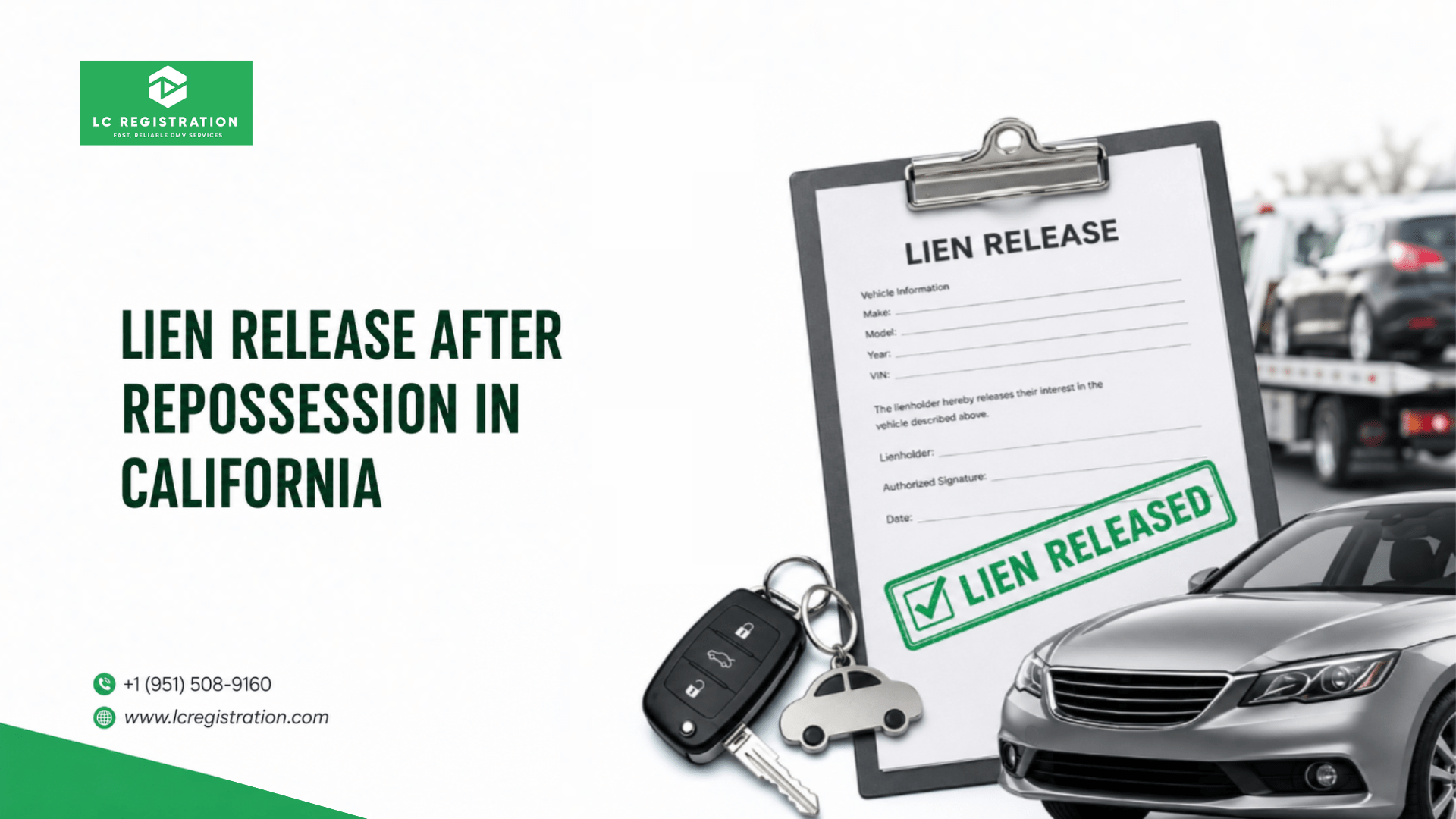
To obtain a duplicate title for a paid-off vehicle, you will need to submit a REG 227 (Application for Replacement or Transfer of Title) to the California DMV. Along with this form, you will need your former lender to complete a Lien Satisfied/Title Holder Release (REG 166), which officially confirms the debt is satisfied and removes their interest from the record.
There is an important California-specific rule here that trips many people up. For vehicles that are two model years old or newer, a REG 166 alone is not sufficient if the lender is a non-ELT participant. In those cases, only the legal owner on record can initiate the duplicate title request. Always confirm your lender’s ELT status before assuming which path applies to you.
If your former lender requires a notarized signature on the lien release and they are not a recognized financial institution, plan for that extra step before submitting your application.
Option 3: The Lienholder Went Out of Business
This scenario requires the most patience, but it is solvable. The California DMV requires that you first demonstrate a “diligent effort” to contact the lienholder before it will consider alternative resolution paths.
Start by sending a certified letter to the lienholder’s last known address, formally requesting a lien release. Keep a copy of everything: the letter, the tracking number, and the postal return receipt. If the letter is returned undeliverable or you receive no response after 30 days, you can submit a Statement of Facts (REG 256) to the DMV outlining your communication attempts and why a standard lien release is impossible to obtain.
In most cases where the original lienholder is completely unreachable, you will need to pursue a bonded title. A Motor Vehicle Ownership Surety Bond is a financial instrument that protects the state and any legitimate prior claimants if a dispute arises over ownership after the fact. The bond amount is typically tied to the vehicle’s current market value. It is an added cost, but it is the legally sanctioned path forward when a release cannot be obtained.
For businesses that have been acquired or absorbed by another financial institution, check the FDIC’s BankFind database to identify the successor company that may now hold the original loan records. DMV service experts familiar with California’s bonded title process can significantly cut down the back-and-forth involved in these cases.
What to Expect With Processing Times
Standard DMV mail and drop-off submissions for a duplicate title typically take 3-4 weeks. If your lender is an ELT participant and initiates the process electronically, the average turnaround shortens to around 8 business days. Complex cases involving defunct lienholders, surety bonds, or REG 256 statements will take longer and may require in-person follow-up.
One thing worth knowing: if your vehicle record shows a pending Report of Deposit of Fees (RDF), the DMV cannot automatically generate your paper title. These transactions require manual processing by a DMV representative, which adds time to an already extended timeline.
Work With Licensed DMV Service Experts
Between the REG 227, REG 166, REG 256, ELT requirements, and the rules that vary by vehicle model year, a lost title with a lienholder is one of those situations where a single missed detail sends the whole application back to square one.
LC Registration is a licensed California DMV partner and a team of DMV service experts authorized to process replacement titles, lien releases, and registration-related documentation, without the DMV lines or the guesswork. Whether you are dealing with an active lien, a paid-off loan, or a lienholder you cannot reach, we have worked through every version of this situation.
Contact us today to get your lost title in California sorted quickly and correctly.
FAQs
Can I sell my car in California if the title is lost and a lien is still showing?
No. You cannot legally transfer ownership without a clear title in hand. You will need to resolve the lien, obtain either a REG 166 or a completed lien release from your lender, and receive the replacement title before any sale can proceed. If you are unsure of the current lien status on your vehicle, DMV service experts can pull the record and clarify exactly what steps apply.
Does a California lien release need to be notarized?
It depends on who the lienholder is. Recognized banks and licensed financial institutions generally do not require notarization on lien releases. If the lienholder is a private party or a smaller company, the DMV typically requires a notarized signature to verify authenticity.
What if the DMV mailed my title to the wrong address after the loan payoff?
Contact your lender first to confirm they sent the electronic release. Then, verify your current address is properly updated in the DMV system. Once the lien release is confirmed as processed, you can apply for a lost title in California using the REG 227 form.
Can I go directly to a California DMV field office to resolve this faster?
Certain DMV offices offer same-day title printing for an additional fee, but availability is limited, and wait times at field offices can be significant. A licensed Business Partner Automation (BPA) provider can process many duplicate title requests in California immediately without requiring a full DMV office visit.