Welcome to California! Whether you’re here for work, family, school, or the sunshine, one of the first things you’ll need to take care of is registering your out-of-state vehicle. Unlike some states, California has strict rules and tight deadlines—you only have 20 days from the date you establish residency to register your vehicle.
This guide walks you through everything you need to know so you can stay legal, avoid penalties, and get California plates on your vehicle quickly.
Step 1: Know the 20-Day Rule
Once you establish residency in California (examples: you get a job, enroll your kids in school, or lease a home), you’re required to register your vehicle within 20 days. If you miss the deadline, late fees will be added to your registration costs.
Pro Tip: The DMV counts calendar days, not business days—so don’t wait!
Step 2: Gather Required Documents
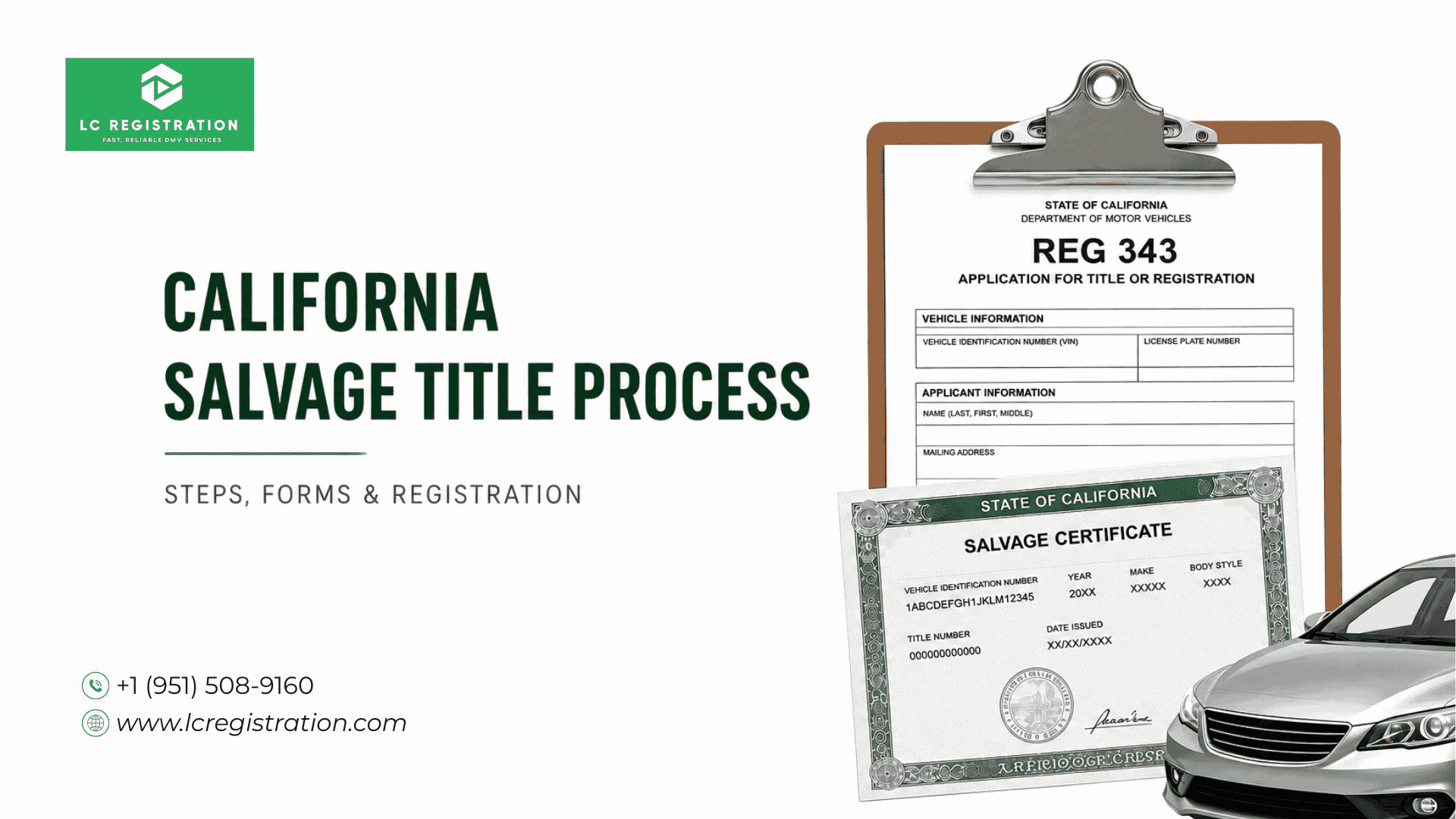
- Completed Application for Title or Registration (Form REG 343)
- Out-of-State Title (or registration card if the title is held by a lender)
- Valid California Address (PO Boxes not allowed)
- Smog Check Certificate (if required – more below)
- Odometer reading (for vehicles under 10 years old)
- Weight certificate (for commercial vehicles)
- Proof of Insurance meeting California’s minimum coverage
- Vehicle Verification (Form REG 31) – done by DMV, CHP, or a licensed verifier
Step 3: Vehicle Inspection (VIN Verification)
California requires a physical inspection of your vehicle’s VIN. This is called a Vehicle Verification and is done to confirm your car’s identity and history.
You can get this done:
- At a DMV field office (appointment usually required)
- By the California Highway Patrol (CHP)
- Through a licensed VIN verifier (faster and often more convenient)
Step 4: Check for Smog Requirements
Most gasoline-powered vehicles over 4 model years old will need a California smog inspection before registration. The test must be performed at a licensed STAR-certified smog station.
Exceptions:
- Electric vehicles
- Hybrids (in the first 8 model years)
- Diesel vehicles under 14,000 lbs and newer than 1998
- Smog check results are sent electronically to the DMV—you don’t need to bring a paper copy.
Step 5: Pay Registration Fees
Registration fees vary based on your vehicle’s value, weight, location, and type. Here’s a rough breakdown:
- Registration fee
- California Highway Patrol (CHP) fee
- Vehicle License Fee (VLF)
- Use tax (based on your car’s value and where you moved from)
- Smog abatement or test fees (if applicable)
- Late penalties (if over 20 days past due)
- You can estimate your fees using the California DMV Fee Calculator.
Step 6: Submit Your Registration
1. DMV Field Office: Schedule an appointment online. Bring all your documents and payment. Be prepared for long wait times if not booked in advance.
2. Licensed DMV Registration Service (Like Us!): Skip the lines. A licensed registration provider can often handle:
- VIN verifications
- Smog test coordination
- Same-day processing
- Temporary operating permits (if needed)
- This is the fastest and most convenient option if you’re new to the state and unsure how the DMV works.
What Happens If I Miss the Deadline?
If you don’t register within 20 days of becoming a California resident, you’ll be subject to:
- Late registration fees
- Potential tickets or citations
- Possible impoundment if you’re stopped by law enforcement
- Don’t risk it. The sooner you register, the smoother the transition will be.
Final Checklist
Before you head to register your car, make sure you have:
- Out-of-state title or registration
- Proof of insurance
- Completed REG 343 form
- VIN verification
- Smog certificate (if needed)
- California address
- Payment for fees
Need Help Registering Your Out-of-State Car?
We’re a California-licensed DMV registration service and can help you register your vehicle fast, without the DMV lines, and with same-day tags in many cases.
Whether you just moved to Los Angeles, San Diego, Sacramento, or anywhere in between—we’re here to make your move easier.